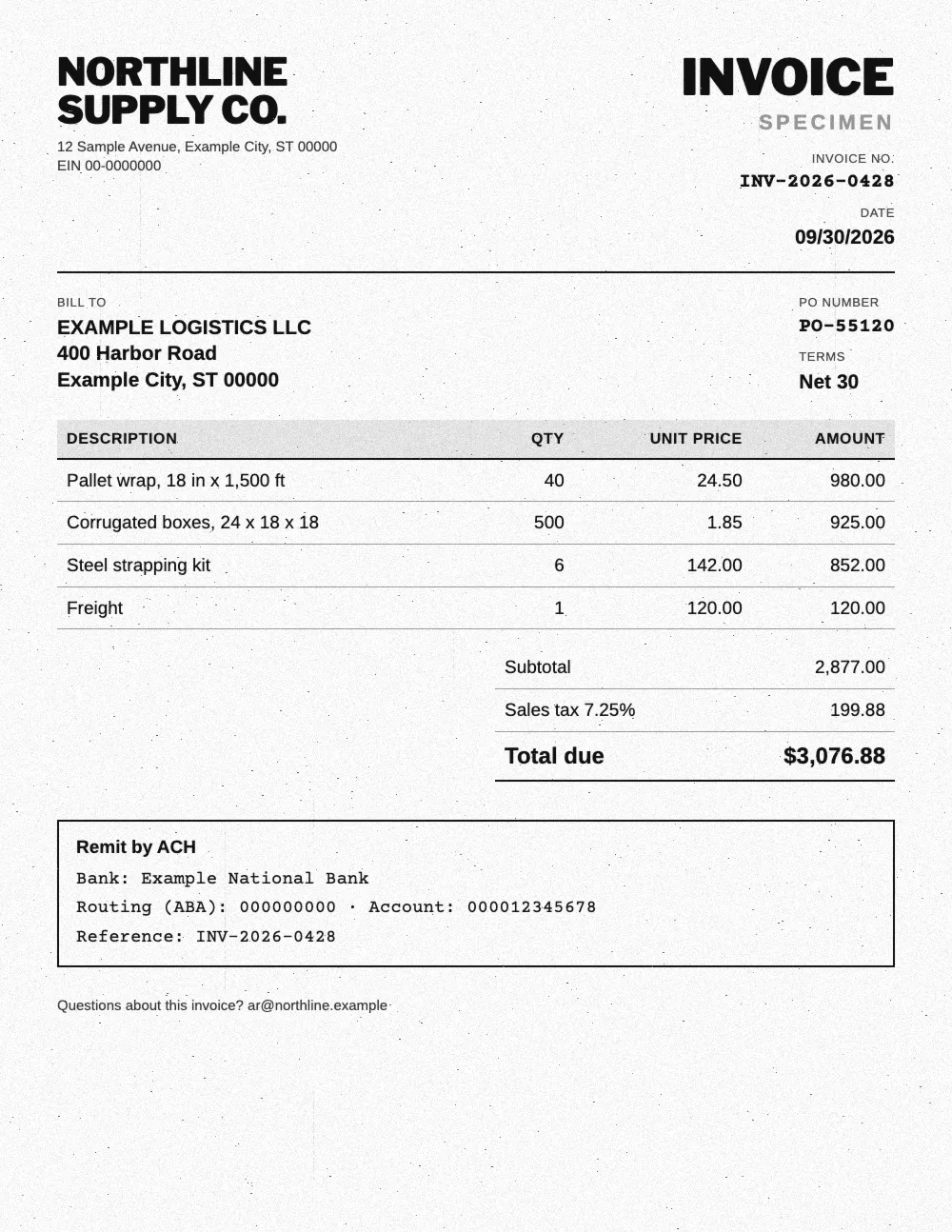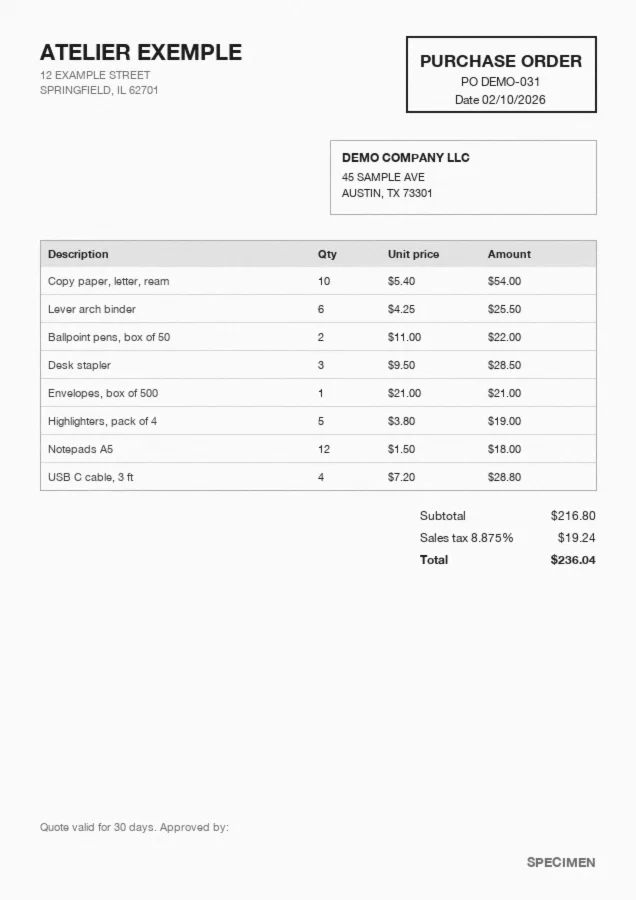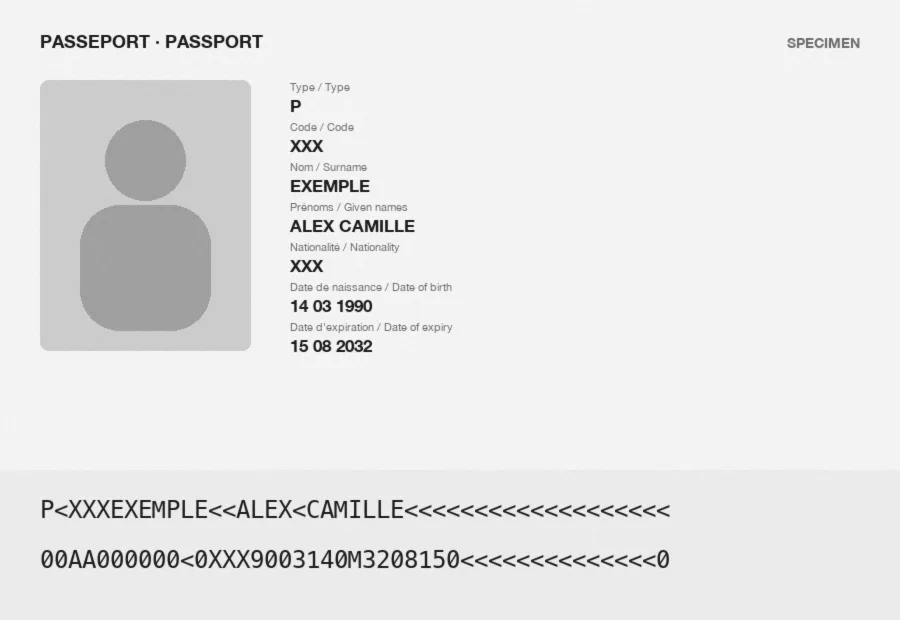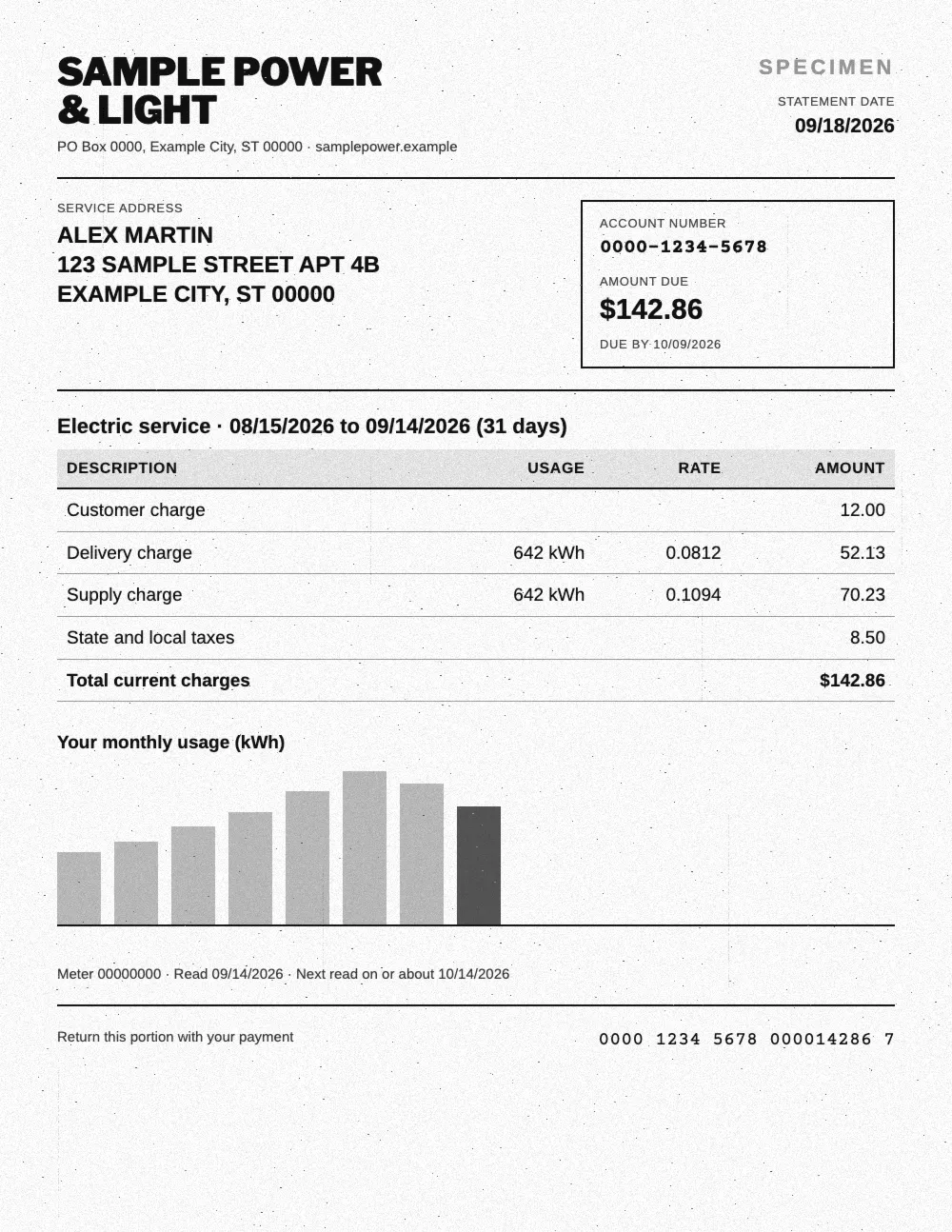














What is prescription OCR?
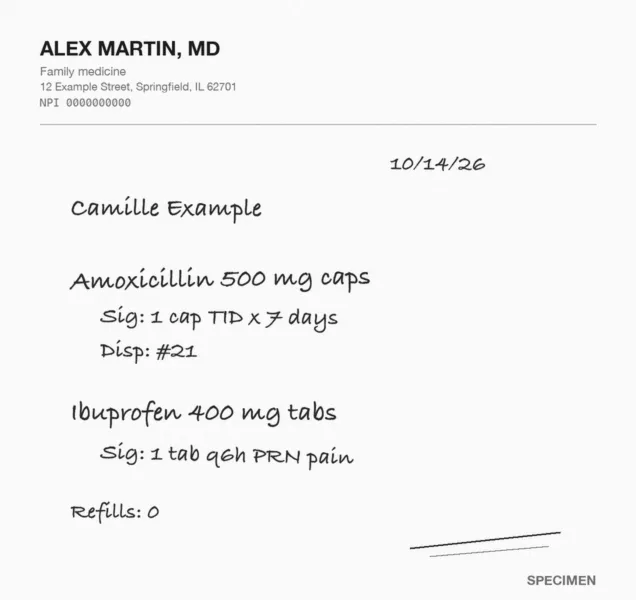
Prescription OCR reads a printed, handwritten, scanned or faxed prescription and turns it into structured data: prescriber, NPI and DEA number, patient, date, then each drug with strength, sig, quantity and refills. Koncile reads any layout without templates, checks that the fields are consistent, and flags files edited after issue. Export to JSON, CSV or Excel, or send it to your pharmacy system by API.
Manual entry
Someone types the script into the pharmacy or claims system. Fine for a handful, slow as volume grows, and every hard to read word slows it down further.
Text OCR
Google Lens or Tesseract turn the image into raw text. Finding the drug, the strength and the sig in that text is still left to a person or to your own code.
AI extraction with checks
The model understands the layout: it puts each drug on its own row with its sig, then checks that the fields and the file itself are consistent.
What data does prescription OCR extract?
Koncile's prescription template captures the prescriber, the patient and the date first, then one row per drug with its strength, sig, quantity and refills. You can edit, add or describe the fields to extract from the interface, such as a payer ID or a diagnosis code.
| Field | Example | Extraction rule |
|---|---|---|
| Prescriber | Alex Martin, MD | Name and credentials as printed on the script. |
| NPI | 0000000000 | 10 digit National Provider Identifier of the prescriber. |
| DEA number | AM0000000 | Required on controlled substance prescriptions (21 CFR 1306.05). |
| Patient name | Camille Example | Full name of the patient. |
| Date of birth | 01/01/1980 | Patient date of birth, when printed. |
| Date written | 10/14/2026 | Date the prescription was written, in your chosen format. |
| Drug and strength | Amoxicillin 500 mg capsule | Generic or brand name, with strength and dosage form. |
| Sig | 1 cap TID x 7 days | Directions for use, with abbreviations expanded on request. |
| Quantity | 21 | Quantity to dispense, as written or in figures. |
| Refills | 0 | Number of refills authorized. |
| Substitution | Permitted | Whether generic substitution is permitted or the script says dispense as written. |
| Signature | Present | Whether the prescriber's signature appears on the script. |
How does prescription OCR work?
Reading a prescription takes five steps, from intake to export. Checks run during extraction, before any data is exported.
- Step 1
Intake
Upload, a dedicated email address or the API: the script arrives as a PDF, a scan, a photo or a fax saved as PDF.
- Step 2
Reading
Printed text and handwriting are read page by page, even on a skewed photo or a faint fax.
- Step 3
Structuring
Each drug lands on its own row, with strength, sig, quantity and refills.
- Step 4
Checks
Identifier formats, consistency between fields, file edits and a confidence score on every field.
- Step 5
Export
JSON, CSV, Excel, webhook or API, into your pharmacy or claims system.
How accurate is prescription OCR on handwriting?
An accuracy rate means nothing until you say what it measures. Character accuracy always looks high and says little, since one misread letter can turn one drug into another. Field accuracy, such as the right drug or the right sig, is the level to compare tools on, and document accuracy tells you how many scripts need no correction.
Our reference measurement covers lab test orders: [96.4%] end to end on [24] handwritten orders and [304] tests, measured in [July 2026] for a clinical laboratory, and [98%] for reading alone. It does not carry over to medication prescriptions, which need their own test.
Every extracted field gets a confidence score, and uncertain fields go to review. The best test is still your own prescriptions.
Can ChatGPT read a prescription?
A general assistant can read one prescription you paste into it, and often gets a clean script right. It gives no confidence score per field and keeps no audit trail, and pasting patient data into it raises HIPAA questions.
For patients, the pharmacist remains the reference: if a word on your prescription is unclear, ask your pharmacist rather than an app.
One script, in a chat
Good enough to make sense of one clean prescription. No field schema, no confidence score, and a format that can change from one try to the next.
Thousands of scripts, in production
A dedicated pipeline reads the file, returns the same fields every time, checks identifiers and file edits, and routes uncertain fields to a person.
E-prescribing and EPCS: why paper scripts remain
Electronic prescribing is now the norm for many prescriptions in the US. The federal rule for controlled substances still leaves room for paper, fax and exceptions.
EPCS under Medicare Part D (source: CMS, page updated September 29, 2026)
| Date | What changed |
|---|---|
| 2018 | The SUPPORT Act requires controlled substance prescriptions under Medicare Part D to be sent electronically. |
| January 1, 2023 | Prescribers must send at least 70% of their Part D controlled substance prescriptions electronically. |
| January 1, 2028 | Compliance date for prescriptions written for patients in long term care facilities. |
Exceptions
Prescribers with 100 or fewer Part D controlled substance prescriptions a year, those hit by a declared disaster and those granted a waiver are exempt from the rule.
Fax still counts as paper
A faxed prescription is not counted as electronic under the CMS rule. Pharmacies, payers and labs keep receiving faxes, scans and photos that someone has to read.
How to spot a forged prescription
The DEA lists the signs pharmacists watch for: handwriting that is too legible, unusual quantities, missing or non standard abbreviations, a photocopied look, and different inks on the same script (source: DEA Diversion Control Division). When in doubt, pharmacists call the prescriber, then report to their State Board of Pharmacy and the local DEA office.
Koncile checks the file while it reads it. Three signals come up in the verdict.
To check a single document, use our document fraud detection software.
Edited file
A quantity or a drug changed after issue leaves traces in the file: metadata, edited areas, mismatched fonts. They are found and explained in plain words.
Inconsistent fields
A quantity that does not match the days of supply, an NPI in the wrong format, an odd date: these gaps show up in the verdict, with a fraud score from 0 to 100.
Duplicate scripts
The same prescription sent twice, under a new file name or with a slightly changed date, is flagged before it is filled or paid for a second time.
Integrations for pharmacies, payers and labs
Extracted data flows into the tools you already run: pharmacy management system, EHR, lab information system or claims platform. The connection goes through exports, the API or a no code tool.
Developers can start from our OCR API page.
Exports
JSON, CSV and Excel, with configurable output: column names, order, date formats, and one row per drug on the script.
API and webhook
Send scripts through the API, get the result by webhook as soon as extraction is done, then push the data into your own system.
No code
Make and n8n connect Koncile to your tools without development, to trigger extraction and route the fields where you need them.
Email intake
A dedicated email address receives scripts from patients, prescribers or partners and extracts the attachments automatically.
Prescription OCR pricing
Koncile is priced per page analyzed. The free plan gives you 20 credits to test on your own prescriptions, with no credit card. Paid plans add API access and lower the price per page as volume grows.
To compare, weigh that price against the time it takes to key a script with several drugs, and the cost of one dispensing error. Plans and prices are on our pricing page.
Free and open source prescription OCR
Free tools return text. A prescription needs fields, checks and hosting fit for health data: that is where they stop.
Evernote
Evernote offers a free online tool that turns an image into text. The output stays raw text, with no fields, no structured dates and no checks.
Tesseract
The reference open source engine. It reads print well and handwriting much less so, and you build everything around it to get fields.
Hugging Face and GitHub
Research models trained on prescription images are a good start for a prototype. Accuracy, hosting and HIPAA compliance are yours to handle.
Google Lens
Lens reads the text in a photo, handwriting included, and lets you copy it. It puts nothing into fields and checks neither the dose nor the file.
What HealthNet Homecare and Gompels say
HealthNet Homecare, a clinical homecare provider, and Gompels process their UK prescriptions with Koncile, handwritten ones included.

“The success rate is close to 100%, even on an exam code that is not present on the document.” Sean Hickey

“Koncile reads our prescriptions from every region of the UK, English and Scottish alike, down to the handwritten ones.” Patrick Gompels

An AI OCR built for security
Your documents are never used to train a model. Fully encrypted software, secure storage of extracted data, a SOC 2 certified and GDPR compliant platform.

Prescription OCR: frequently asked questions
What is prescription OCR?
Software that reads a printed, handwritten, scanned or faxed prescription and extracts the useful data: prescriber, NPI and DEA number, patient, date, then each drug with strength, sig, quantity and refills. Modern tools use AI to read any layout without templates, then export JSON, CSV or Excel.
Can OCR read doctors' handwriting?
Mostly, yes. AI reads handwriting using the context of each line: drug name, strength, directions. Illegible or ambiguous words get a low confidence score and go to review instead of being guessed. For a patient in doubt about a treatment, the pharmacist remains the reference.
Is there an AI that can read prescriptions?
Yes. Google Lens and consumer apps help read a word on a script, and tools like Koncile are built for teams that process prescriptions in volume: they extract every field, score its confidence and check the file. A misread letter can change a drug, so uncertain fields should always be reviewed.
Can ChatGPT perform OCR on prescriptions?
It can read one clean prescription in a chat. It has no fixed schema, no confidence score per field and no audit trail, and pasting patient data into a general assistant raises HIPAA questions. For production workflows, a dedicated pipeline with checks is more reliable.
What does OCR mean in healthcare?
Two things. Optical character recognition is the technology that turns a scanned or photographed document into text and data. OCR is also the Office for Civil Rights of the US Department of Health and Human Services, which enforces HIPAA.
How do pharmacists spot a fake prescription?
The DEA points to signs such as handwriting that is too legible, unusual quantities, missing or non standard abbreviations, a photocopied look or different inks. Pharmacists then call the prescriber and report to their State Board of Pharmacy and local DEA office. On a digital file, Koncile also flags edits and inconsistent fields.
Is Koncile HIPAA compliant?
Yes. Koncile is audited against SOC 2 standards and complies with GDPR, HDS and HIPAA requirements. Your prescriptions are never used to train a model, and extracted data is stored encrypted. Our security policy covers hosting and retention.