














Design, state and year
Each state redesigns its license every few years. A fake often mixes the background of one version with the fonts or layout of another.
Check an ID document in seconds: ID document verification that reads the photo, scan or PDF and scores the risk from 0 to 100.
Create a free account to run the analysis.
Create a free accountFor document volumes or an API, talk to an expert.
The ID document checker used by insurers, banks and large companies
 4.8 / 5
Holding the card? Check the hologram, the edges, the UV features and scan the barcode. Got it as a photo, scan or PDF? Those physical features are gone, so check the file instead: edited fields, a portrait pasted or regenerated by AI, fonts off the state template, an MRZ or barcode that disagrees with the front, dates that cannot coexist. Koncile runs these checks in 10 seconds and returns a fraud score from 0 to 100.
Each state redesigns its license every few years. A fake often mixes the background of one version with the fonts or layout of another.
Each field has its font, weight and baseline. A retyped date or name drifts by a pixel or two, or changes font.
The fine pattern must run unbroken under the text and the portrait. A smooth or repeated patch gives away an erased field.
Edges too sharp, light from another side, a grain that differs from the card: the classic signs of a pasted or AI regenerated face.
The PDF417 barcode on a license, or the MRZ on a passport, must say exactly what the front says, check digits included.
License number format, issue date, expiry and date of birth must fit the state's rules and each other.
On a scan or a PDF: editing software, AI generator marks, two save dates. The eye cannot see them, the file keeps them.
IDs almost always arrive as a photo or a scan, and AI generators now produce them in seconds. The fake ID detector reads the image first, to catch an AI generated ID or a swapped portrait, then the machine readable zone, the barcode, the numbers and the template of each version. When the ID arrives as a PDF, the file is read too.
A proprietary AI model trained on fakes analyses the pixels of the card. It flags a portrait pasted in or regenerated, and IDs fully generated by AI from a sample image or a photo of a real card. The score shows where to look.
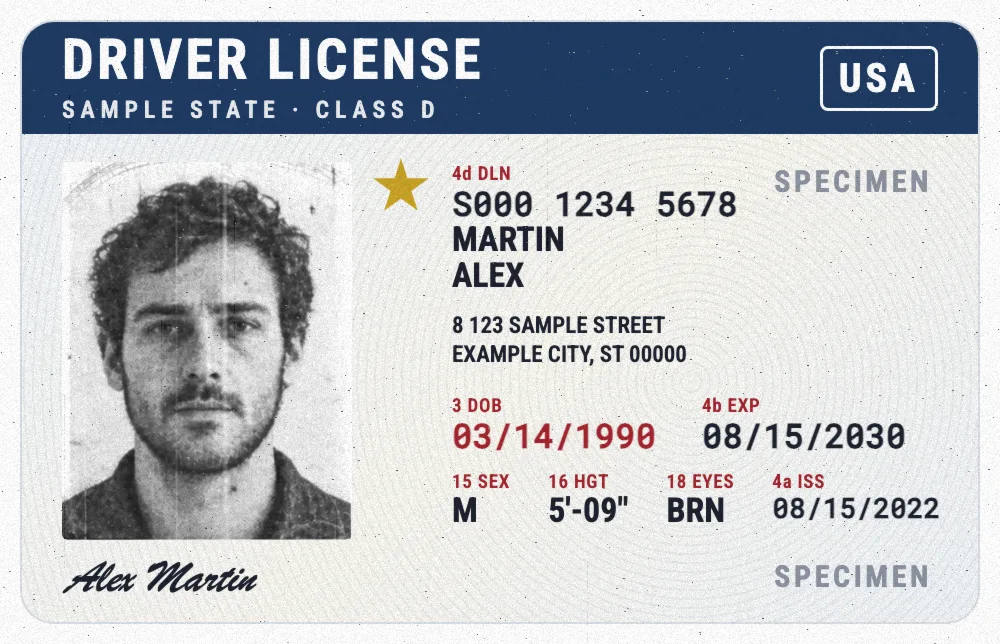 AI detected82/100
On a photo or a scan, a retyped date breaks the fine background pattern, a cloned field repeats the same texture, and pasted text floats above the guilloche.
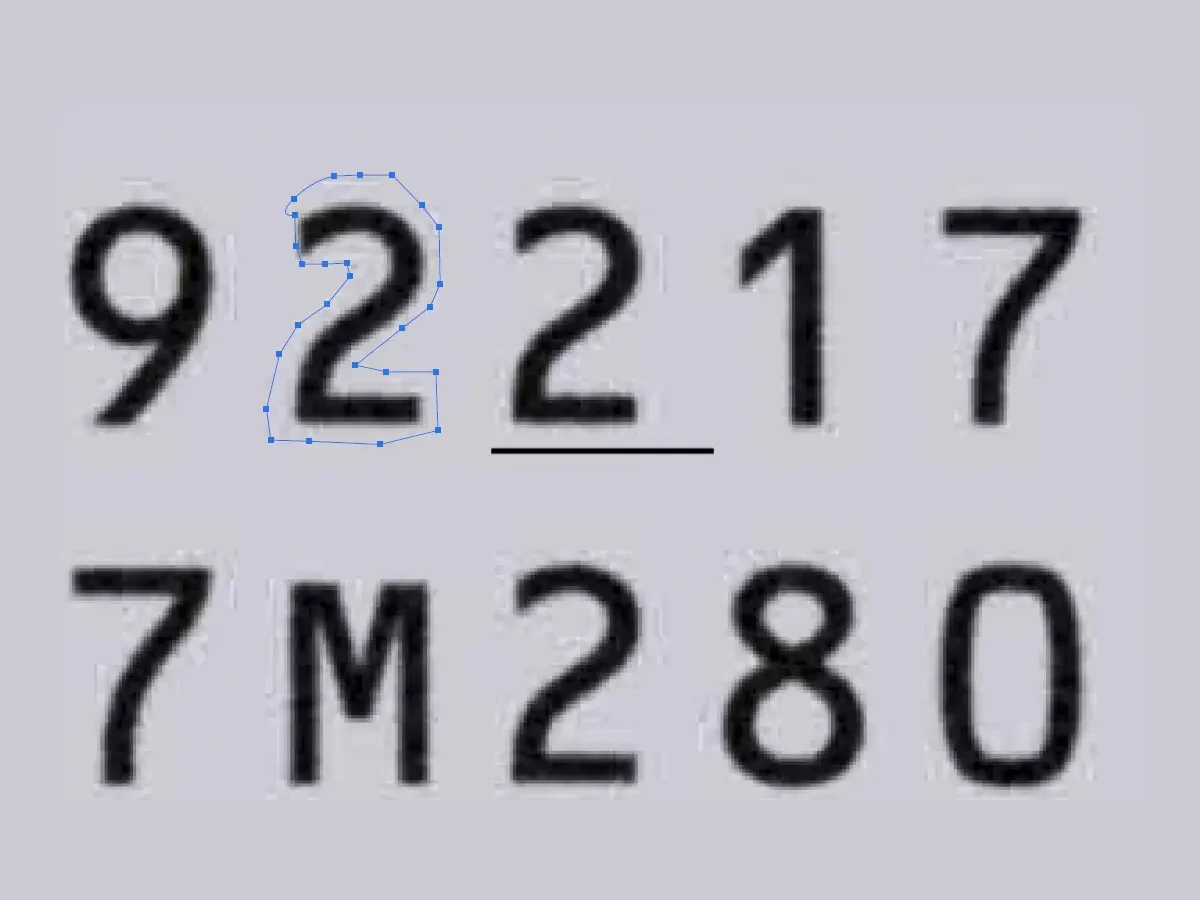
Each state redesigns its driver's license and ID card every few years, and each version has its own fonts, weights, baselines and margins. A rewritten field drifts by a few pixels or changes font, and a fake often mixes an old design with a new one.
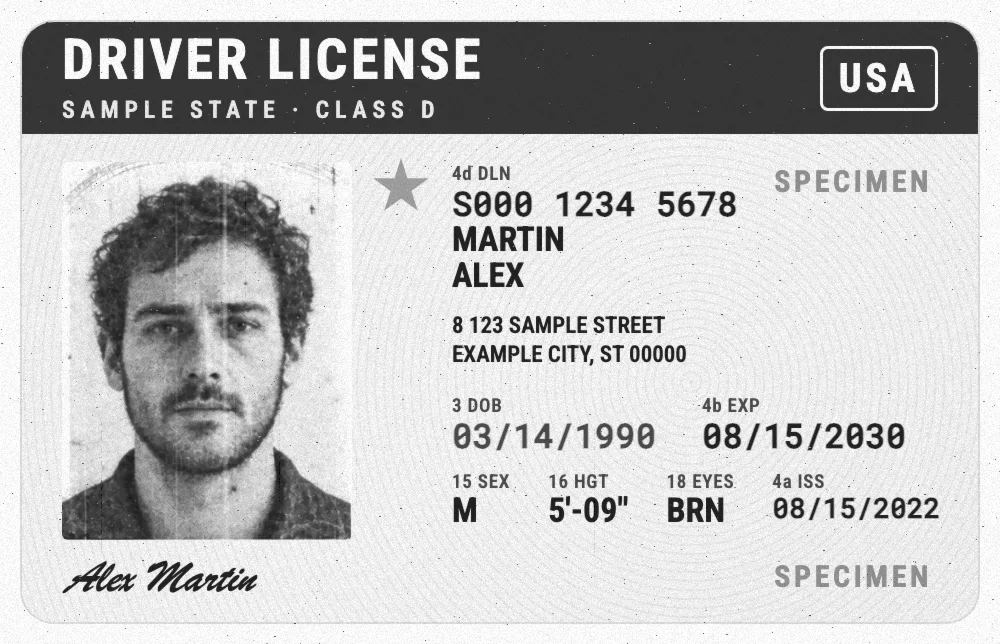
On a passport or a passport card, the machine readable zone is extracted, its check digits recomputed under ICAO 9303 and its fields compared with the front. On a driver's license, the PDF417 barcode follows the AAMVA standard: its data must match the printed fields.
Fakes rarely come alone: a generator produces batches, and once its fingerprint is known, all its documents fall at once.
A significant share of altered or forged documents
Koncile corpus, October 2026
One known fingerprint takes down a whole batch of fakes.
Koncile corpus, October 2026.
Yes, and it is now the common case: in tenant screening, lending, hiring or on a marketplace, the ID arrives as a photo, a scan or a PDF, never in hand. You lose the feel of the card and the UV light. You gain the file.
The security background, the fonts, the alignments, the edges of the portrait and the barcode or MRZ are all readable on a sharp photo. Most edits break at least one of them.
Holograms, raised printing and UV features do not survive a photo. Ask for the front and the back, full frame, in good light, as the original files rather than a rebuilt PDF.
A file keeps what the card cannot: the camera or editing software in the EXIF, the marks some AI generators leave, and in a PDF the dates of every save. Koncile reads them along with the pixels.
Four ways of making a fake ID come up in the files Koncile analyses. Each one leaves different traces.
Sites such as OnlyFake or MacDoc sell ready made fake IDs, sometimes for 15 dollars. A generator produces thousands of documents with the same engine: once its fingerprint is known, the whole batch is recognised.
On the scan of a real card, the portrait, a date or a number is changed with software such as Photoshop. The security background, the font and the metadata give the edit away. Our study dataset contains 494 of them.
An image model produces a complete card in a few seconds. These fakes remain fairly easy to spot for our AI generated document detector. Our study dataset contains 539 documents at high risk.
Some sites sell ready to fill card templates. The same template serves many fraudsters: identical background, field positions and defects from one document to the next make it recognisable.
There is no single US driver's license: each state has its own design, its own number format and its own rules. Knowing them catches fakes that look right at a glance.
Most states print a vertical card for drivers under 21. A horizontal card for a 19 year old, or a vertical one for a 40 year old, is a red flag.
REAL ID compliant cards carry a star in the top corner. A few states also issue Enhanced licenses, valid at land and sea borders: a star or an Enhanced mention on a version that never had one gives a fake away.
California uses one letter and seven digits, Texas eight digits, Florida one letter and twelve digits. A number that breaks its state's format is a red flag; one that fits proves nothing on its own.
| State | License number format | Enhanced license offered |
|---|---|---|
| California | 1 letter + 7 digits | No |
| Texas | 8 digits | No |
| New York | 9 digits | Yes |
| Florida | 1 letter + 12 digits | No |
| Illinois | 1 letter + 11 digits | No |
| Georgia | 7 to 9 digits | No |
| Michigan | 1 letter + 12 digits | Yes |
| Wisconsin | 1 letter + 13 digits | No |
Without a tool, these three checks stop clumsy fakes in a few minutes. A tip: ask for the original photos of the front and the back, not a screenshot or a rebuilt PDF.
On a passport or passport card, each character takes a value (digits as they are, A = 10 up to Z = 35, the filler < = 0), multiplied in turn by 7, 3 and 1. The remainder of the sum divided by 10 is the check digit. Run it on the number, the date of birth and the expiry.
Scan the PDF417 barcode on the back of the license with an AAMVA reader: name, date of birth, license number and expiry must match the front. A match only proves consistency, since barcodes are easy to encode. Then check that the expiry fits the state's rules and the holder's age.
Follow the fine background pattern under the portrait and the fields: it must run unbroken. Be wary of a portrait with edges too sharp or lit from another side.
Koncile's fraud detection API gives you a score from 0 to 100 and detailed explanations of manipulation risks, right inside your own tools.
Front, back, MRZ and barcode, field by field.
High, medium or low level, with a one sentence explanation.
High risk from 80.
A one line summary ready for your information system.
curl -X POST https://api.koncile.ai/v1/upload_file \ -H "Authorization: Bearer $API_KEY" \ -F "files=@drivers-license.jpg"requests.post("https://api.koncile.ai/v1/upload_file/", headers={"Authorization": f"Bearer {API_KEY}"}, files=[("files", open("drivers-license.jpg", "rb"))]){ "status": "DONE", "General_fields": { "Document_type": { "value": "Driver's license, California", "confidence_score": 0.99 }, "License_number": {"value": "D5820417", "confidence_score": 0.98} }, "Fraud_detection": { "risk_score": 84, "summary": "Date of birth retyped: font and baseline differ from the template", "signals": [ {"name": "Image retouching", "severity": "high"}, {"name": "Fonts and alignment", "severity": "medium"} ] }}Wherever an ID opens an account, a loan or a policy, a fake is costly. Here is where the checker fits in.
Account opening at a bank, a fintech or a payment company: the ID is checked before the account goes live, as part of the Customer Identification Program. The detail of every test is kept for audit and examiners.
Personal loans, auto finance and leasing: the identity is cross checked with the pay stubs, bank statements and proof of address in the same application.
IDs in underwriting files, checked with the driver's license, the vehicle registration and the claims history. Anomalies are flagged before the policy is bound or a claim is paid.
Landlords and property managers receive IDs with pay stubs and bank statements. The checker scores the ID and cross checks the name with the rest of the application.
Employers must examine identity and work authorization documents and accept those that reasonably appear to be genuine. The checker helps HR teams flag the copies that deserve a closer look.
Your biometric provider matches the face with a live selfie, Koncile analyses the document itself. One more API call, and the two checks complete each other without changing the journey.
Some edits leave no visible inconsistency: right name, right dates, the right font to the eye. The fake ID detector relies on signals that are invisible to the naked eye, in the pixels of the image, in the MRZ and the barcode and, when the ID arrives as a PDF, in the file itself.
| ID element | What Koncile checks | What gives an edit away |
|---|---|---|
| Portrait | Pixels of the face and its outline, grain, lighting, how it joins the card background | A portrait pasted in, regenerated by AI or with a different grain from the card |
| Security background | Continuity of the guilloche and fine patterns under the fields and the photo | A pattern broken, smoothed or repeated by a clone stamp |
| Fonts and geometry | Font, weight, baselines and margins of each field, compared with the template of the state and version | A date or a name retyped that drifts by a few pixels |
| Machine readable zone | On passports and passport cards: extracted fields and check digits recomputed under ICAO 9303, compared with the front | A wrong check digit, a number or a date that differs from the front |
| PDF417 barcode | On driver's licenses and state IDs: data encoded to the AAMVA standard, compared with the printed fields | A barcode that disagrees with the front, or a front edited after the barcode was copied |
| Numbers and dates | License number format by state, validity period, holder's age, issue date | An issue date after the expiry, a validity that does not fit the holder's age |
| Version and REAL ID marking | Design identified by state and year, REAL ID star or Enhanced marking where the design carries one | A new design font on an old background, a star on a design that never had one |
| Image metadata | EXIF: device, software, capture and save dates | Editing software after the phone camera, dates out of order |
| AI metadata | Marks left by AI tools: C2PA manifest (Content Credentials), IPTC "digitalSourceType" field, model name | An image declared as created or edited by a generative AI |
| PDF file | When the ID arrives as a PDF: producer software, dates, saved versions, serialisation fingerprint | A PDF saved again in an editor, one image laid over another |
An ID brings together a name, a date of birth, a number and a photo: everything needed to steal an identity. Founded by a former lawyer, Koncile was built with data protection at the core of its architecture: third party SOC 2 audit, GDPR compliance, secure hosting. IDs are encrypted, deleted after analysis and never used to train a third party model.



Check seven things in order: the design for the state and year, the fonts and alignments, the security background, the portrait, the barcode or MRZ against the front, the numbers and dates, and, on a file, editing traces. Koncile runs these checks in 10 seconds and returns a fraud score from 0 to 100.
Yes. A sharp photo still shows the security background, fonts, alignments, portrait edges and the barcode or MRZ, and the file adds what the card cannot show: editing software, AI generator marks and save dates. Holograms and UV features are lost, so ask for the original photos of the front and the back.
Yes. A scanner at a door mostly reads the barcode, and a fake can carry a barcode copied from a real license. The image can still be wrong: retyped fields, a pasted portrait or a background that does not match the state's design.
Know the state's current and previous designs, its license number format, whether it prints vertical cards for drivers under 21 and whether it issues Enhanced licenses. A card that breaks one of these rules is a red flag.
Yes. In February 2024, 404 Media documented OnlyFake, which sold AI generated ID images for 15 dollars. These images can look right to the eye, but they leave traces in the pixels and in the file that a detector trained on fakes picks up.
It is a tool that combines several technologies to spot the anomalies behind an edit or a fraud: machine learning on the image of the card, reading of the MRZ and the barcode, and analysis of the PDF file, which is written like code. The goal is to stop the few percent of fakes that slip into your processes.
It can help, mainly to spot an inconsistent date or number format. It lacks three things: models specialised in images edited or generated by AI, knowledge of the traces each editing tool leaves, and a base of each state's ID templates, which brings the mismatches out. A language model is only one part of the machine.
Yes, as long as you check the file and not just the picture. Upload the photo, scan or PDF to the checker at the top of this page: the first document is free and the result comes back in 10 seconds, with a fraud score from 0 to 100.
Decode the PDF417 barcode on the back with an AAMVA compliant reader and compare its data with the front: name, date of birth, license number, expiry. A match only proves consistency, because barcodes are easy to encode. Checking the record itself goes through AAMVA's DLDV service, open to approved organizations only.
Under section 326 of the USA PATRIOT Act, 31 CFR 1020.220 requires banks to run a written Customer Identification Program. Documentary verification typically relies on an unexpired government issued ID bearing a photograph, such as a driver's license or a passport, with non documentary methods as a complement. Checking the document itself is the first step.
It can be. 18 U.S.C. § 1028 covers producing, transferring and possessing false identification documents; producing or transferring a false driver's license or ID card carries up to 15 years in prison. States add their own offenses. If you receive a fake, keep the original file, the analysis report and the date of receipt.
No. Koncile analyses the document submitted, image or PDF: retouching, AI generation, MRZ, field consistency. It does not match the face with a live selfie and does not read the chip. An authentic stolen ID can therefore pass: the two checks complete each other, and Koncile plugs in by API next to the tool already in place.
A portrait that does not sit in the card, with a different grain or light. Fonts or alignments that drift from the state template. A barcode or MRZ that disagrees with the printed front. On a file, add a fourth: editing traces in the metadata.
Each document gets its own method: a proprietary ML model for photos, known metadata and forensics for native PDFs, and contextual cross checks.
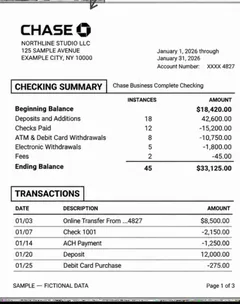
Inflated balances, deleted lines, a PDF rewritten with software other than the bank's.
See the detection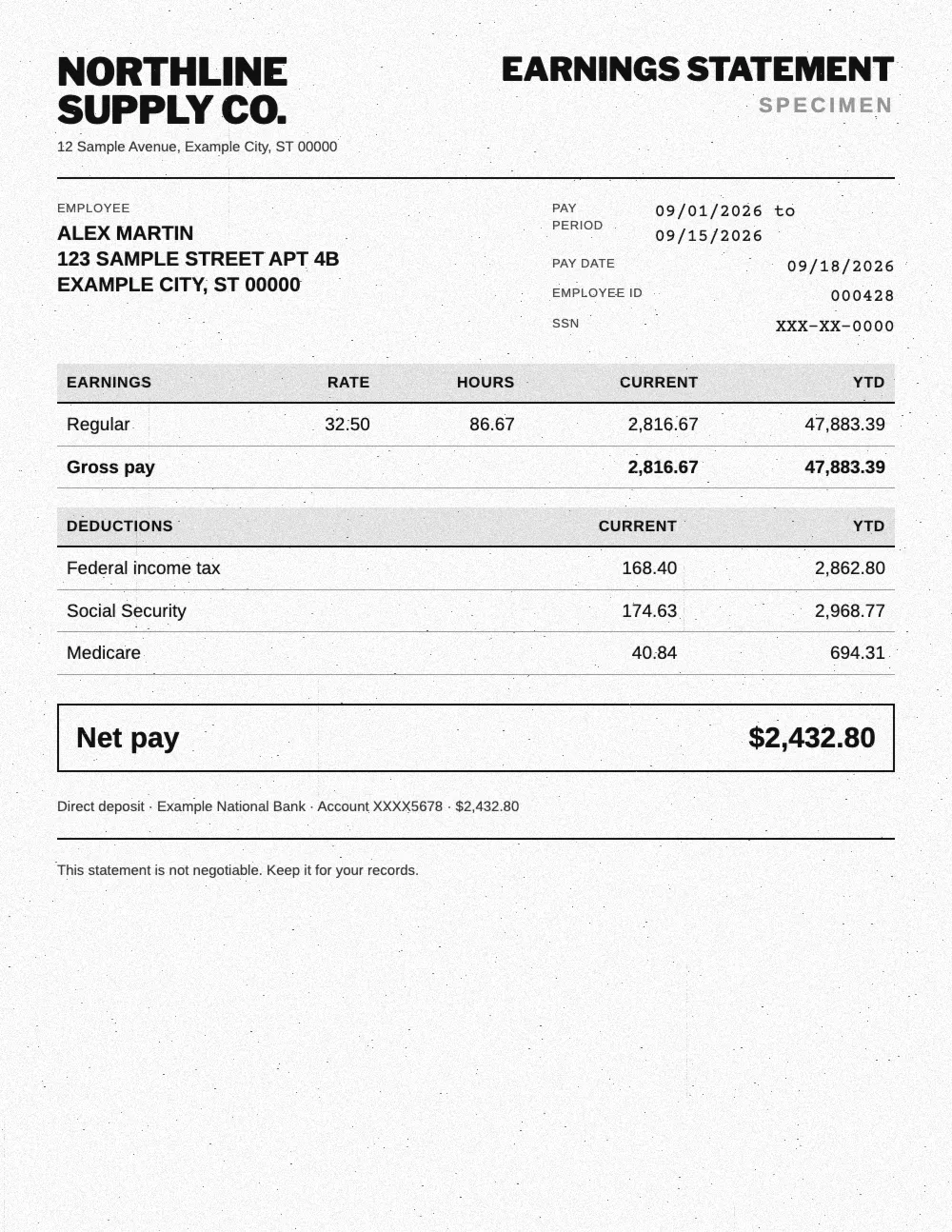
Net pay changed, contributions that do not match gross pay, a layout that does not match the payroll software.
See the detection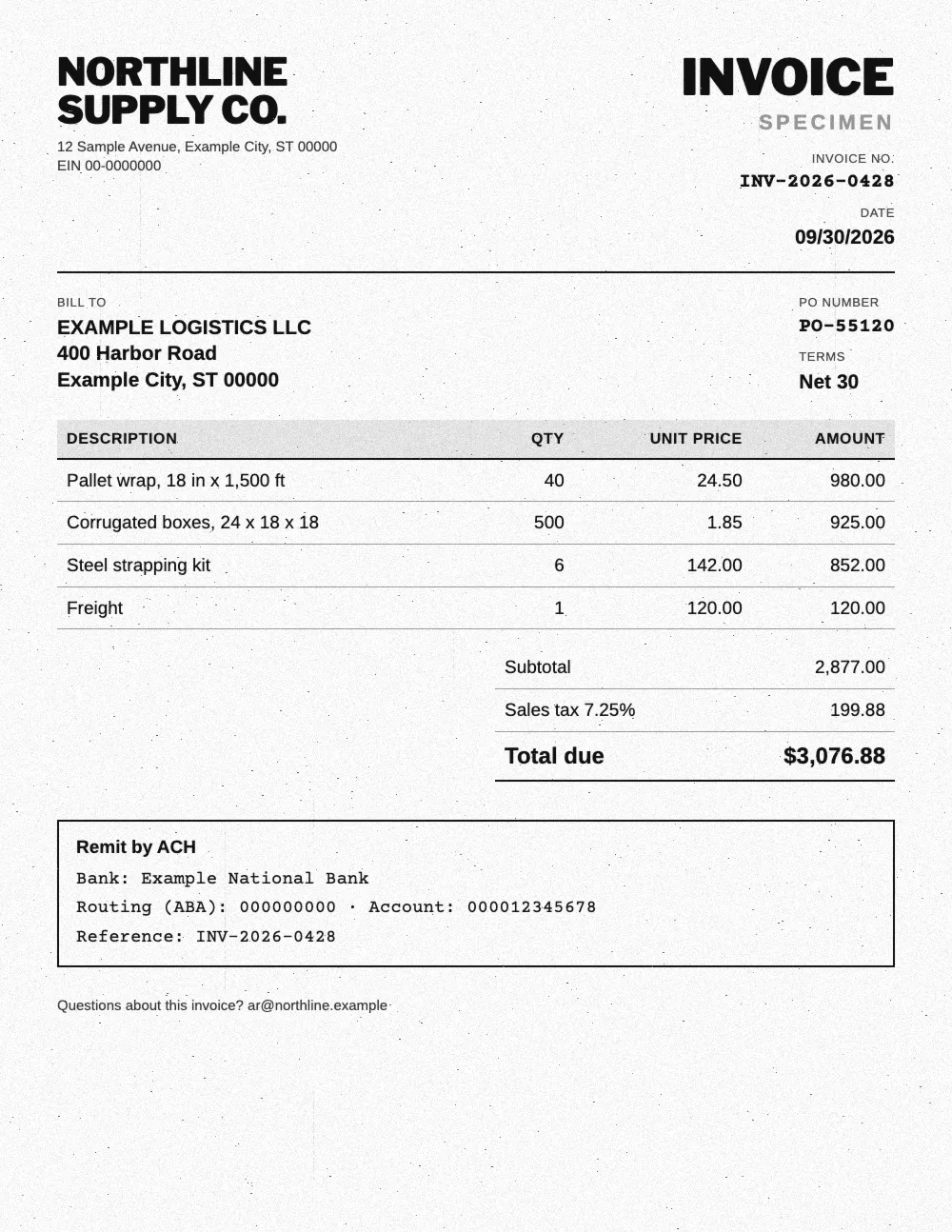
Edited amounts, wrong VAT, duplicates and made up suppliers.
See the detection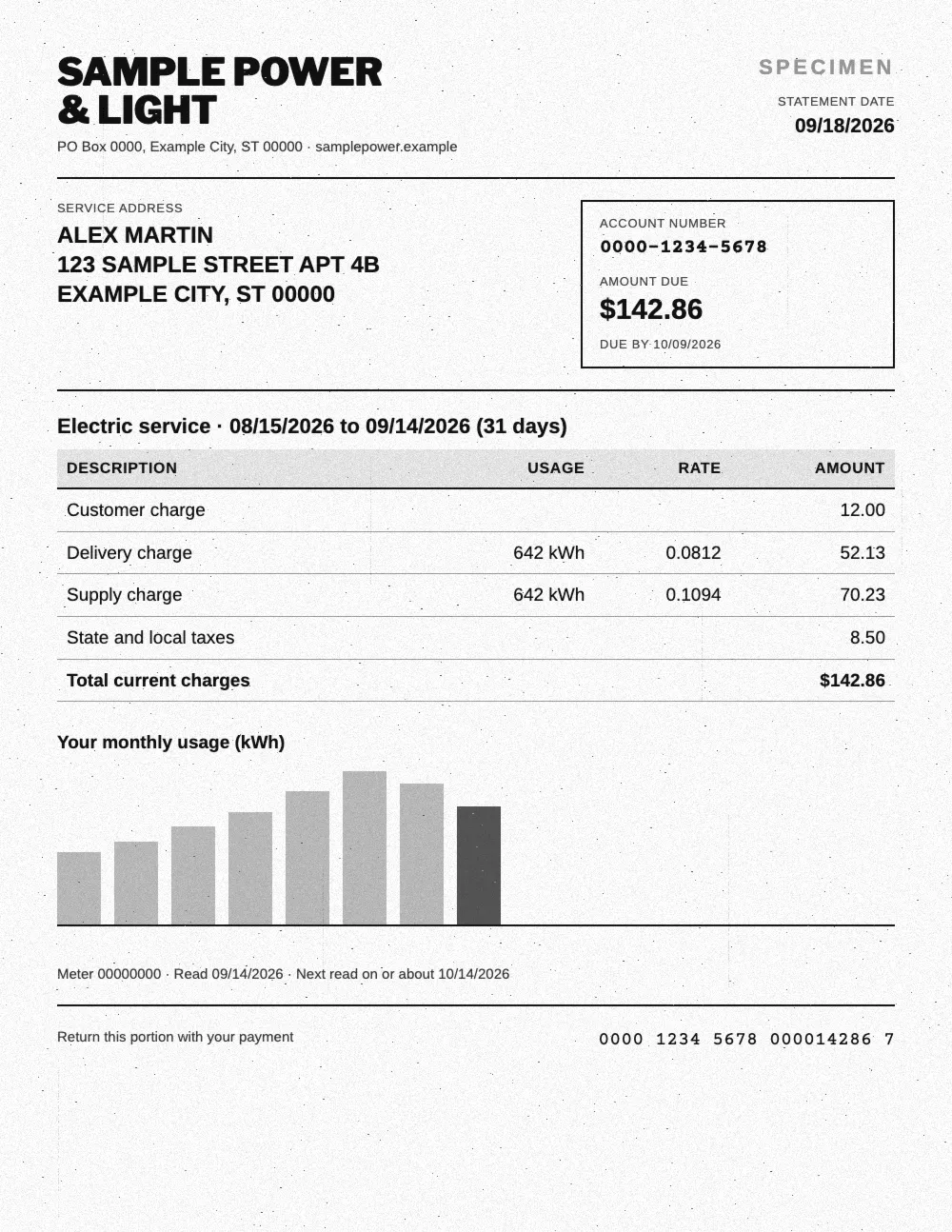
Address or name replaced on an energy or phone bill, date moved forward.
See the detectionUpload your bank statements, pay stubs or IDs: Koncile extracts the data and flags fakes in seconds.
Talk to an expert