








Read our white paper on AI forgeries in 2026
New AI fake detection model. Try it now
  1. Home
  2. Industries
  3. Lending
Lenders, leasing and fintech

Catch lending fraud
before the loan is approved

Lending fraud hides in the loan file: statements, pay stubs, tax documents and IDs scored from 0 to 100, mortgage included.

  • Fraud score from 0 to 100
  • 150+ checks per document
  • Under 3 seconds per page
4.6 / 5 on Trustpilot
Loan file #2417Example
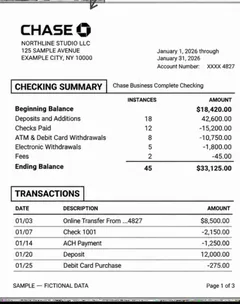
  • Bank statementBalance edited, PDF rewritten after the bank's exportAlert
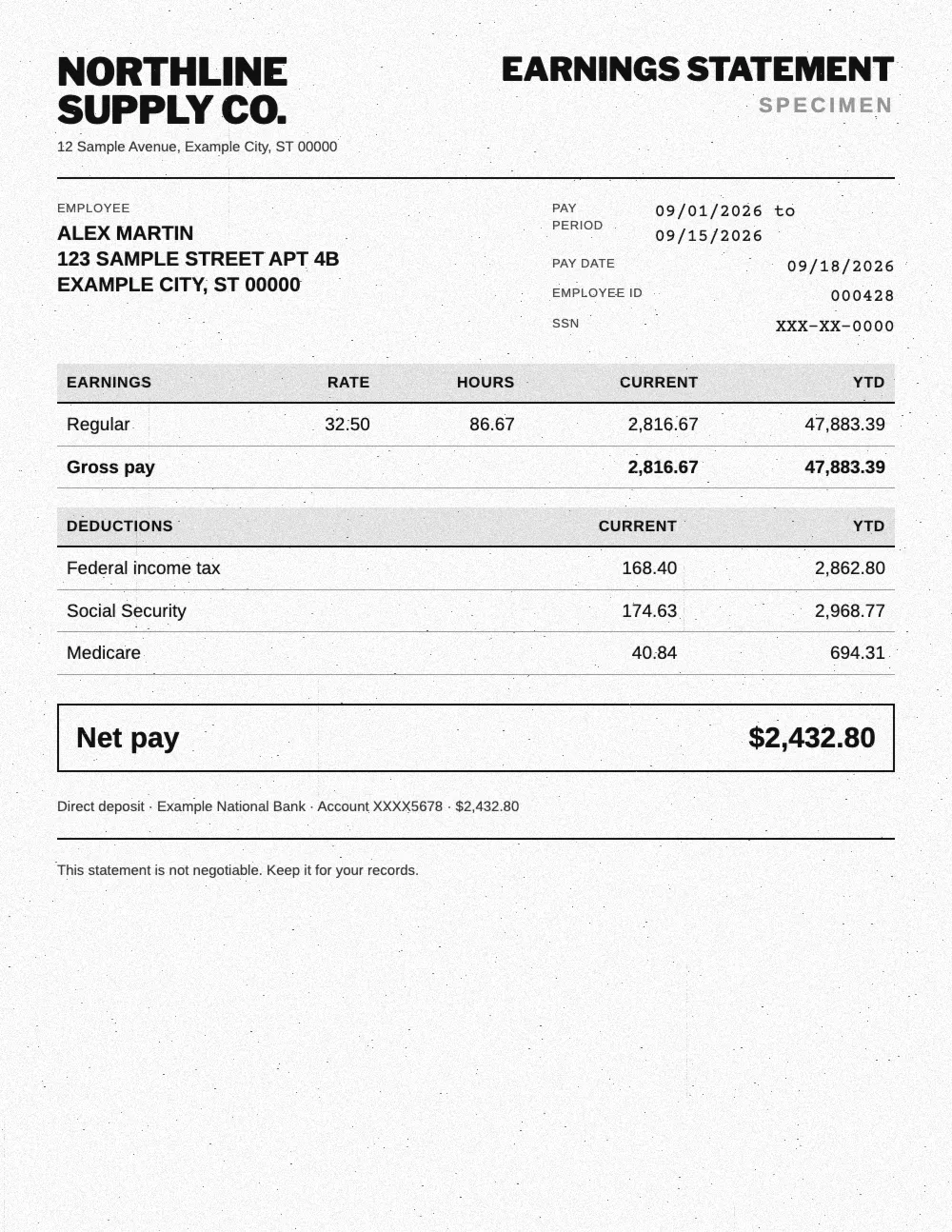
  • Pay stubNet pay inconsistent with gross pay and deductionsReview
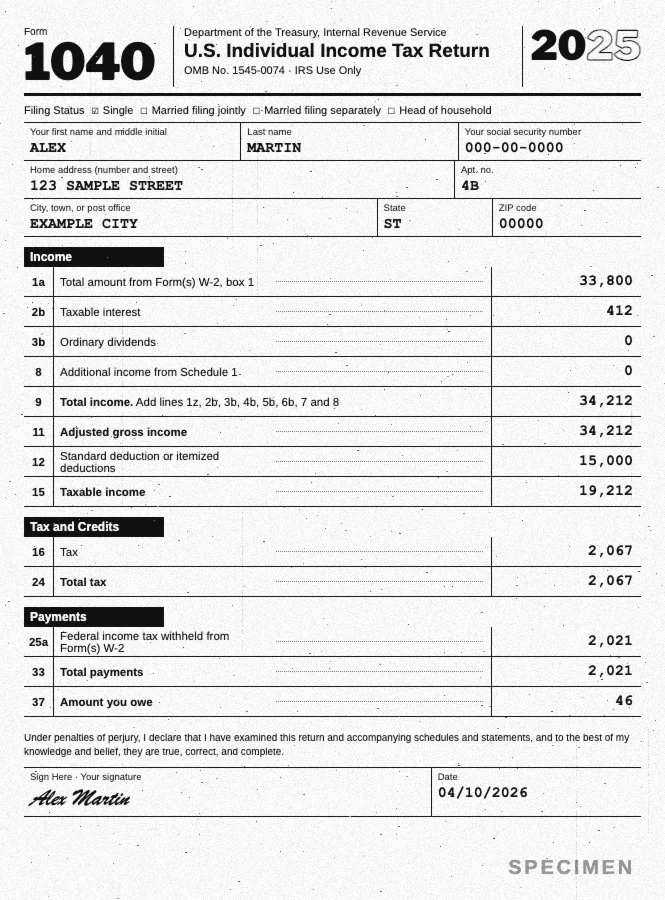
  • Tax documentTemplate and metadata match the issuerCompliant
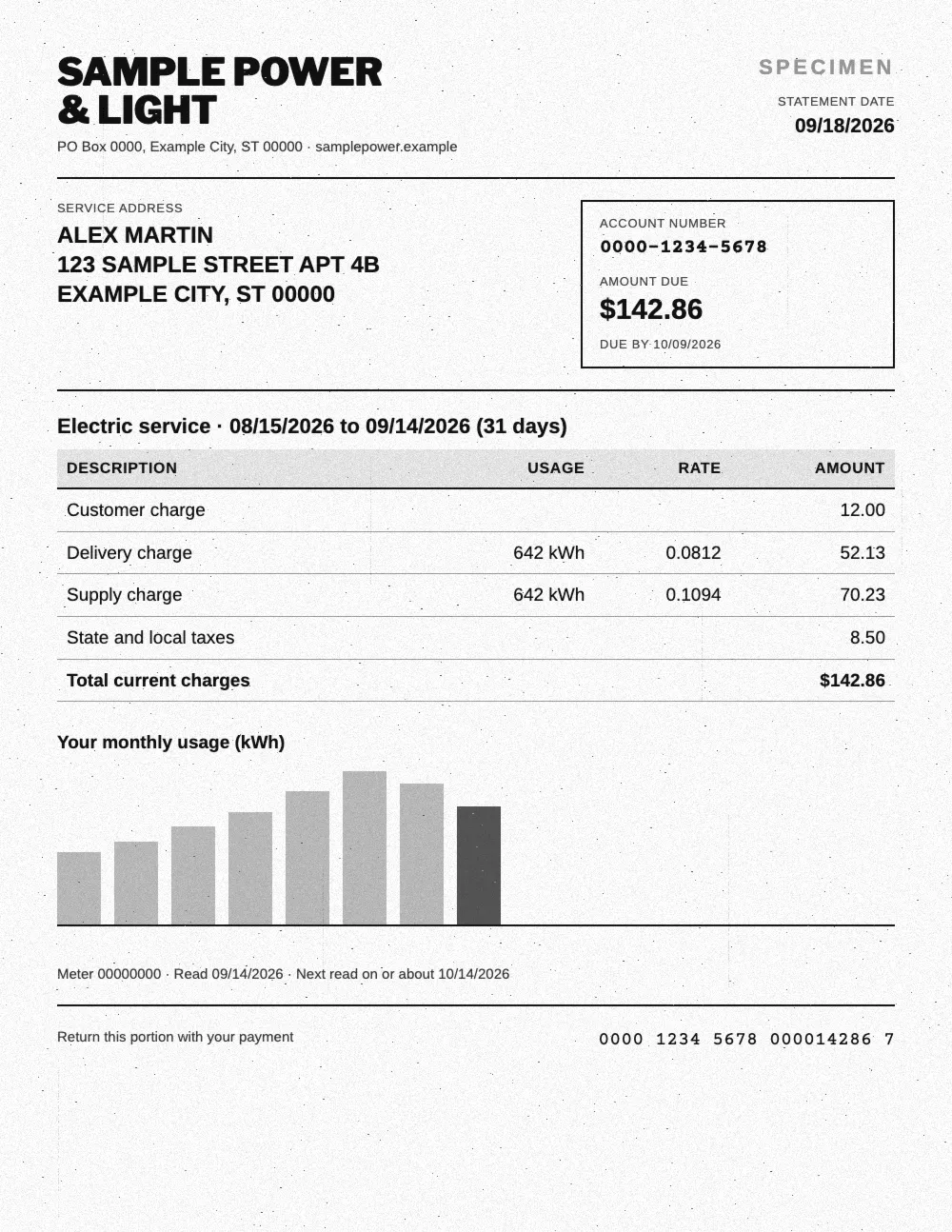
  • Proof of addressAccount holder differs from the applicantReview
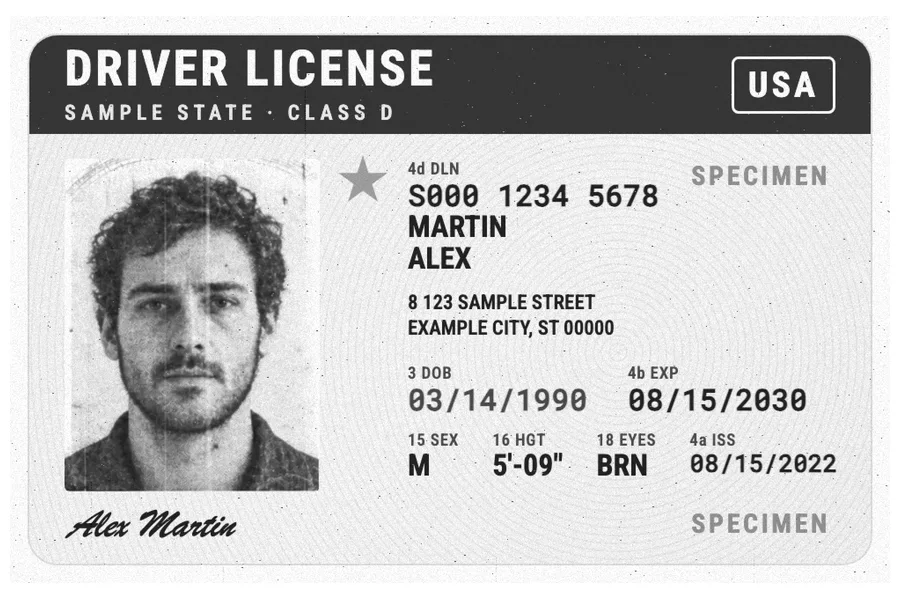
  • ID documentNo edit detected on the photo and fieldsCompliant

Illustrative example. Every document gets a fraud score from 0 to 100 and a justification, test by test.

The document checker used by insurers, banks and large companies

4.8 / 5
In short

Loan fraud detection: how do you check a loan application?

Lending fraud almost always goes through a document in the file: income inflated on a pay stub, a balance edited on a bank statement, a tax document altered, an identity or an address borrowed. You find it by checking the file first (metadata, edits, the issuer's template), then the arithmetic, then the applicant's name on every document.

  1. The file firstProducer software, modification date, fonts: a statement rewritten in a PDF editor no longer looks like the bank's export.
  2. Then the arithmeticGross, deductions and net on a pay stub, running balances on a statement: a changed amount almost always breaks a sum.
  3. The known issuerEach document is compared with the known documents of its bank, payroll software or tax authority.
  4. The right name everywhereThe applicant must appear on every document. A bill or a statement in a third party's name deserves a question.
  5. A score, not a verdictKoncile returns a score from 0 to 100 and the list of anomalies, test by test. The analyst keeps the decision.
Method

Lending fraud and mortgage fraud detection: how a loan file is falsified

Three profiles come back: the borrower who embellishes their own situation, the accomplice who lends their name, and the impostor who builds a file with a victim's identity. The documents do not give away the same thing in each case, whether the loan is a car lease or a mortgage.

Falsified bank statements, common to every file

No loan file without a statement, and that is where everything shows: salary, other loans, incidents. The edits are known. An inflated balance, an added salary, another loan's direct debit erased, round transfers just before the application. The forger's weak point is arithmetic: changing one amount means recalculating every balance that follows, and they often forget. The file gives away the rest, when a statement exported by the bank has been reopened and saved again in a PDF editor. UK lenders reporting to Cifas describe the same thing in the first half of 2026: false bank statements, false wage slips and ever more careful digital edits, with false loan applications up 33% to 895 cases.

Loan application fraud: pay stubs and tax documents edited

On a pay stub, the fraudster raises the net pay and forgets the deductions: gross no longer leads to net. Another classic, an employer that does not exist, or the registration number of another company. On tax documents, declared income and household details move. Our tax document library is French: the French tax notice carries a signed 2D-Doc code that holds the original data, and the tax authority's SVAIR service confirms whether a notice is the latest issued, without judging the file itself. Koncile has not seen US tax returns or W-2 forms at scale; the method, template of the issuer plus arithmetic plus file analysis, applies to any issuer once its documents are in the library.

Application fraud prevention against templates bought online and AI generated documents

Sites sell statements and pay stubs ready to fill in, bank by bank, and generative tools produce them in minutes. These documents carry no editing trace, because they were born fake. You catch them differently: by comparing the file with the known documents of the issuer (format, metadata, producer software) and by checking that the content holds together, the salary on the pay stub found among the statement's credits, dates in the right order, deduction rates plausible for the country. Generators also leave known traces in the files they produce, which is what the file analysis looks for.

Borrowed identity and substituted bank details

In identity fraud, the ID document is often authentic: it belongs to a victim. What breaks is the rest of the file. A statement or bank details whose holder is not the applicant, an address that changes from one document to the next. The bank details decide where the funds go. The Banque de France puts manipulation fraud at €516 M in 2025, more than 40% of payment fraud in France, account number substitution included. Checking the holder of the account before the funds are released costs little.

A single signal does not prove fraud. A statement exported from a bank's mobile app sometimes has unusual metadata without being fake.

Checks

AI in lending: where to place the check in the origination flow

The right moment is when the documents arrive, before the analyst opens them.

Split and classify the application bundle

Applicants rarely send clean documents. A 30 page PDF, photos at an angle, three statements glued into the same file. Koncile splits the bundle, recognises each document (statement, pay stub, tax document, ID, proof of address, bank details), renames it and files it. A missing document shows before the file goes to analysis, and the handler no longer opens every file to find out what it contains.

Income verification software: extract, then apply the income rules

Once the fields are extracted, the lending rules are written in plain language. Meelo's example, a French credit fintech: for a car lease of €600 a month, the customer must show at least €2,100 of income, otherwise the application is declined or a cheaper vehicle is offered in real time. Koncile also checks that every document is in the customer's name and extracts the account number for the direct debit mandate. The amounts read on the pay stub, the statement and the tax document arrive in the same JSON response, ready for your rules engine or loan origination system.

Route each file by its score

Each document gets a score from 0 to 100 and a reason test by test, readable by an analyst who is not a PDF expert. Triage becomes simple: a low score goes through without friction, a middle score goes to the analyst with the list of anomalies, a high score goes to the fraud team. Thresholds are set with your risk team. No more manual review that, for lack of time, skims every file the same way.

Business lending and leasing

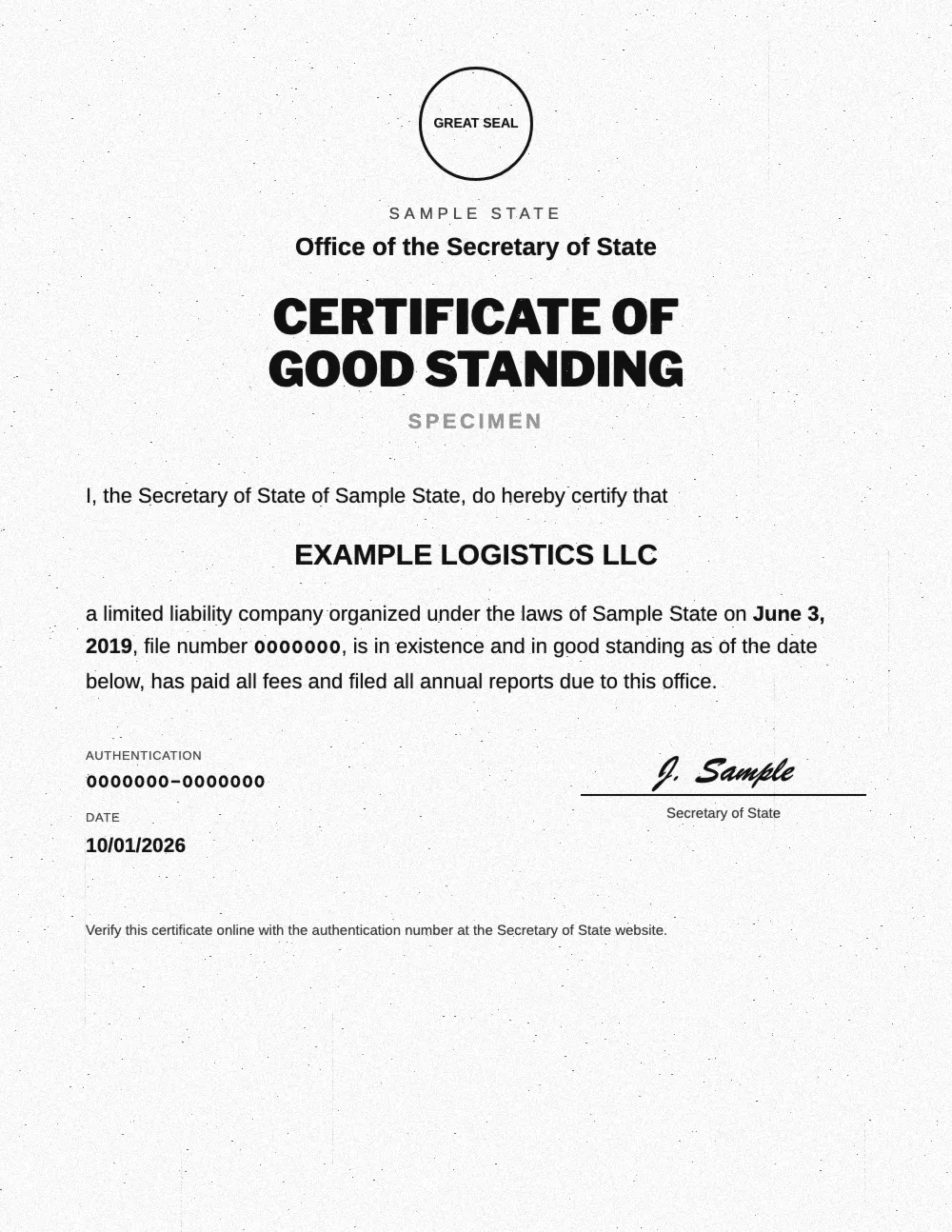
Business lending adds its own documents: annual accounts, tax filings, register extracts, articles of association. At a leasing company that uses Koncile, French corporate tax filings are read on 151 fields, and the checks defined by the risk department run inside the fraud analysis, in production since June 2026. Identifying the company and its directors (register extract, articles, beneficial owners) follows the logic of a KYB onboarding, detailed on our KYC and KYB page.

Case studies

What regulation asks of the lender

Rules differ by country, but all of them expect verified information before credit is granted. Here is what is true and sourced in the EU, the UK and the US.

EU: the consumer credit directive of 2026

Directive (EU) 2023/2225 on consumer credit applies from 20 November 2026. It strengthens the creditworthiness assessment, frames automated processing and wants information on income and expenses verified, where necessary through documents that can be independently verified. Leases with a purchase option, small loans under €200 and interest free credit enter the scope. In France, which transposed it by ordinance in September 2025, supporting documents for identity, address and income were already required above €3,000 for credit sold at a distance or in store. More files, often small amounts: manual review will not keep up.

UK and US: identity verified on independent documents

In the UK, the Money Laundering Regulations 2017 require regulated firms to verify a customer's identity on the basis of documents or information obtained from a reliable source which is independent of the person, and treat documents issued by an official body as independent even when the customer hands them over (regulation 28). In the US, a bank's Customer Identification Program must collect name, date of birth, address and an identification number, then verify them through documents such as a driver's license or passport, or through non documentary methods (31 CFR 1020.220). Neither text says how to tell a genuine document from a forged one: that part is on the lender.

Data protection and penalties

A loan file is sensitive personal data. Koncile is audited SOC 2 Type II, hosts documents in France, deletes them after analysis unless you keep a history, and never uses them to train a model. The metadata library built for each customer holds no personal data. GDPR article 22 applies to the decision: a score informs the analyst, it does not refuse a loan on its own. On the criminal side, presenting a forged pay stub or statement in France is forgery and use of forged documents, three years in prison and a €45,000 fine (Criminal Code, article 441-1); UK and US lenders have their own statutes.

Data

What 150,000 bank statements taught us

The statement is the document we see most in loan files. Here is what our corpus, mostly French and European statements, and our test sets say.

1.4%of forgeries among 150,000 bank statements analysed by Koncile, scanned or native
89%of forgeries detected on 1,200 statements including 400 fakes, against 51% for the best LLM
10 to 20%of false positives for a poorly calibrated metadata test
+33%false loan applications recorded by Cifas in the UK in the first half of 2026

1.4% sounds small. On 10,000 files a year, that is still 140 files built on a forgery, and the best made ones are the ones that get through. A language model reads a statement like a human in a hurry: no metadata, no pixel level edits, no bank template. Hence the gap between 89% and 51%. The other figure that matters is false positives. A statement exported from a banking app has unusual metadata without being fake, and a single threshold for everyone produces 10 to 20% of false alerts that nobody reads after a week. Koncile therefore calibrates each check by issuer and by channel. The banks in our library are mostly French and European; adding a UK or US bank means adding its templates, not rebuilding the method.

Source: Koncile corpus 2026 (150,000 statements, test set of 1,200 statements); Cifas, Fraudscape six month update, August 2026.

Clients

They check their loan files with Koncile

See all our customers

Meelo

French credit fintech. Koncile reads supporting documents at onboarding, checks they are in the customer's name, applies income rules and extracts the account number for the direct debit mandate. Live in one week.

Yomoni

Online savings management. Vincent Sattler sums up the project in one sentence: "Koncile integrates in under an hour."

Business leasing

At this lessor, French corporate tax filings are read on 151 fields and the risk department's checks run inside the fraud analysis, in production since June 2026.

Frequently asked questions

Short answers, with figures when we have them.

Talk to us
  1. Obtaining credit by deceiving the lender: inflated income, hidden debts, forged supporting documents, a third party's identity, or borrowing with no intention to repay. What is considered loan fraud also covers a loan opened in a victim's name. For a lender, most cases go through a document in the file, which is why the file is the place to look.

  2. For UK lenders reporting to Cifas, false applications: 691 false mortgage applications in the first half of 2026, up 4%, with identity fraud on mortgage applications up 36% (Mortgage Solutions, August 2026). In both cases the file carries the lie: income, employment or deposit shown on a statement, a pay stub or a tax document that was edited or made from a template. Mortgage fraud detection with Koncile works on those documents: it reads each one and returns a fraud score from 0 to 100 with the reason test by test, but it does not value the property or check the land register. We have no US mortgage corpus and do not quote US rankings we have not checked.

  3. In three steps. The file: producer software, modification date, comparison with the bank's usual export. The arithmetic: every running balance recalculated line by line. The consistency: salary present, other loans declared, holder identical to the applicant. Open banking avoids the PDF when the customer agrees, but the statement remains the rule in many flows.

  4. Recalculate the path from gross to net and check that deduction rates are plausible for the employee's status and country. Check that the employer exists in company registers and matches the name shown, that the layout resembles a known payroll software template, and that the net pay appears among the statement's credits.

  5. Yes, if it is specialised. On 1,200 bank statements including 400 forgeries, Koncile detects 89% of the fakes, against 51% for the best general purpose language model. An LLM reads the content but ignores metadata, pixel level edits and the issuer's template.

  6. Partly. Koncile extracts every transaction, recalculates the running balances line by line, finds the salary and the existing loan repayments, and checks the file against the bank's known exports. It does not categorise cash flows or compute an affordability score: those stay in your rules engine or your open banking provider. Our issuer libraries were built mostly on French and European banks; a UK or US bank is added from your own document flow, issuer by issuer, rather than claimed before it is measured.

  7. The mirror image of lending fraud: a fake lender asks a company for an upfront fee or its bank details, then disappears. This page is about the other side, the files a real lender receives. For a borrower, the check is simple: the lender must appear in the regulator's register, and no genuine lender asks for a fee before the loan is paid out.

  8. In the US, yes: bank fraud is a federal offence under 18 U.S.C. 1344, and lying on a loan application to a federally insured lender falls under it. In France, a forged pay stub or statement is forgery and use of forged documents, three years in prison and a €45,000 fine (article 441-1 of the Criminal Code), five years and €75,000 for a document issued by a public authority (article 441-2). UK law has its own fraud offences; what a lender needs in every jurisdiction is evidence, a report that says which test failed and where.

  9. At Meelo, one week, with a document by document ramp up. Ecotable connected the API in a few days. Koncile is called through a REST API, Python and JavaScript SDKs, webhooks or an MCP server, and the same call returns the extraction and the fraud score.

Further reading

  • Koncile, Detecting a fake bank statement: our 9 methods, study of 150,000 statements, 2026 · koncile.ai
  • Banque de France, 2025 report of the Observatory for the Security of Payment Means, September 2026 · banque-france.fr
  • Cifas, Fraudscape six month update, August 2026 · fraudscape.co.uk
  • Mortgage Solutions, mortgage fraud increases across all categories, 6 August 2026 · mortgagesolutions.co.uk
  • EUR-Lex, Directive (EU) 2023/2225 on credit agreements for consumers · eur-lex.europa.eu
  • Élysée, Council of Ministers of 3 September 2025 (consumer credit ordinance) · elysee.fr
  • Légifrance, article D312-8 of the French Consumer Code · legifrance.gouv.fr
  • legislation.gov.uk, Money Laundering Regulations 2017, regulation 28 · legislation.gov.uk
  • Cornell LII, 31 CFR 1020.220, Customer Identification Program for banks · law.cornell.edu
  • impots.gouv.fr, online verification service for tax notices (SVAIR) · impots.gouv.fr
  • Légifrance, article 441-1 of the French Criminal Code · legifrance.gouv.fr
  • Légifrance, article 441-2 of the French Criminal Code · legifrance.gouv.fr
  • Cornell LII, 18 U.S.C. 1344, bank fraud · law.cornell.edu

Try Koncile's fraud detection on your own documents

Upload your bank statements, pay stubs or IDs: Koncile extracts the data and flags fakes in seconds.

Talk to an expert