







Read our white paper on AI forgeries in 2026
New AI fake detection model. Try it now
  1. Home
  2. Industries
  3. Insurance
Insurers and brokers

Document AI for insurance fraud detection
from underwriting to claims

Insurance fraud detection starts with the documents: every statement, invoice and photo in a claim is scored from 0 to 100.

  • Fraud score from 0 to 100
  • 62 insurers in the issuer library
  • SOC 2 audited
4.6 / 5 on Trustpilot
Motor claim #4821Example
  • Accident report formDate, place and vehicles consistent with the policyCompliant
  • Vehicle registrationKeeper and plate number match the policyCompliant
  • Driving licenceDate of issue consistent with the driver's ageCompliant
  • Vehicle photosNo capture data, image recompressedReview
  • Repair invoiceTotal retyped in another font, PDF re editedAlert

Illustrative example. Every document gets a fraud score from 0 to 100 and a justification, test by test.

The document checker used by insurers, banks and large companies

4.8 / 5
In short

How do you spot fraudulent insurance claims and applications?

Most insurance fraud travels through a document: a no claims statement edited at underwriting, an inflated garage invoice or a doctored damage photo at claims. To detect it, check three layers on every document, the file, the image and the content, then make sure the whole file tells one story, from the ID to the bank details.

  1. The file firstProducer software, modification dates, successive edits: an insurer's PDF reopened in a consumer editor shows it.
  2. The issuer's templateEach insurer produces its statements the same way. A gap from the known template of the issuer is a strong signal.
  3. Dates and claims historyLicence, policy start, claims and print date must follow each other, and a bonus does not improve without the years to justify it.
  4. The amountsParts, labour, VAT and total on a repair invoice are recalculated line by line.
  5. The imageEdited areas, white patches laid over a line, photos generated in whole or in part by AI.
  6. The whole fileName, address, vehicle and plate must match across registration, licence, policy and invoice.
Documents

The documents checked in an insurance file

No claims proof

Claims history, cancellation, bonus and dates, compared with the templates of 62 insurers and brokers, mostly French.

Vehicle registration

Keeper, plate number, vehicle identification number and edited areas on the certificate.

Driving licence

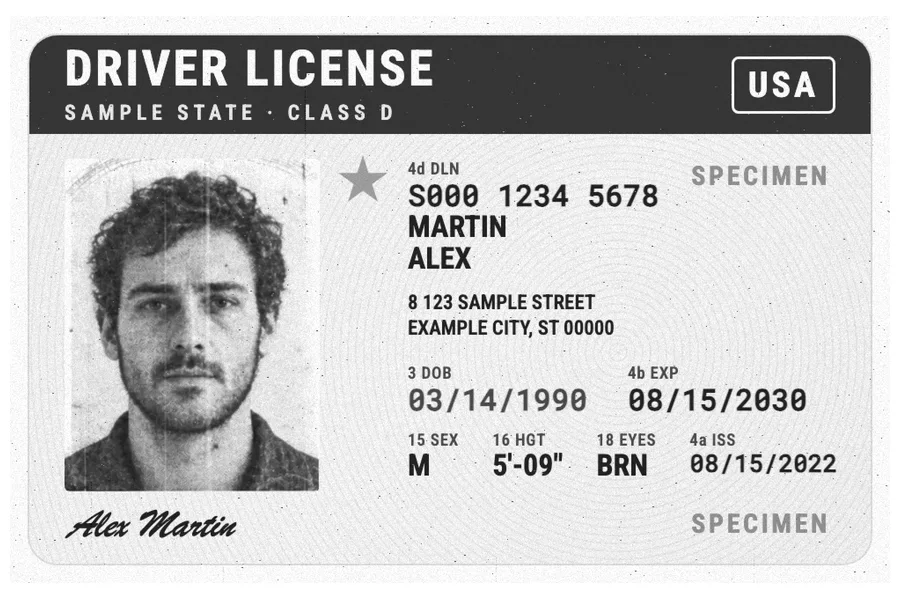
Categories, dates of issue against the legal age, photo and licence number.

ID document

Photo, numbers and dates of the policyholder or beneficiary, consistent with the rest of the file.

Proof of address

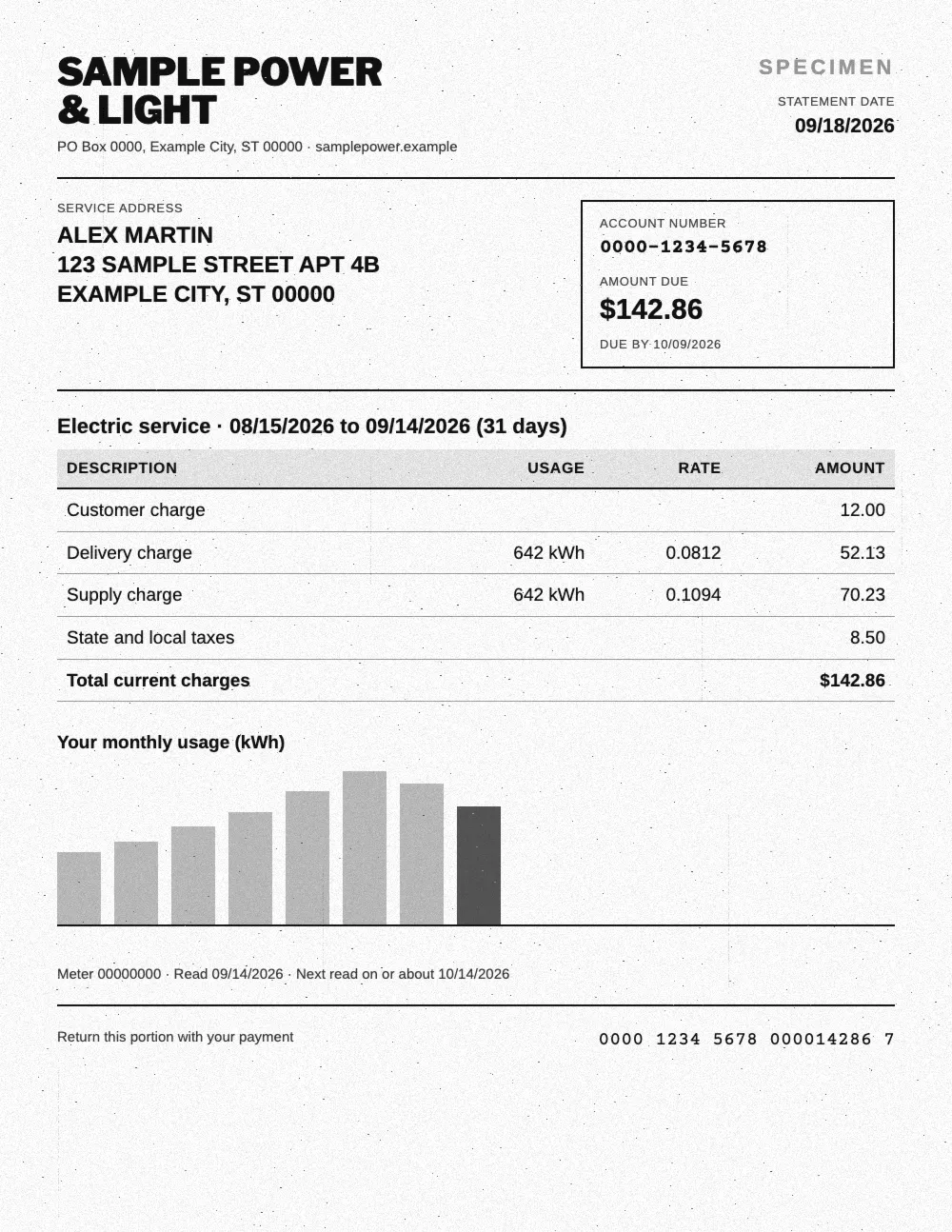
Name and address of the insured risk, issue date and producer software of the utility bill PDF.

Repair invoices and estimates

Totals and VAT recalculated, garage found in company registers, duplicates from one claim to the next.

Claim photos

Edits, AI generated images, capture data missing or inconsistent.

Bank details and statements

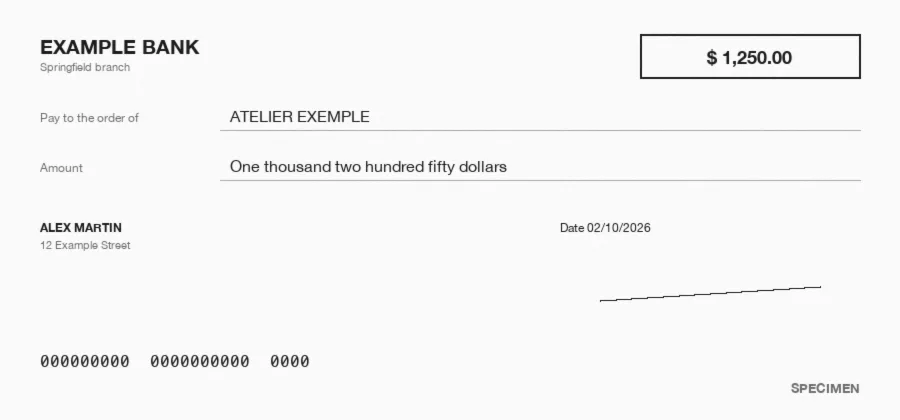
Holder of the account receiving the payout, replaced account number, statement rewritten with other software.

Method

Insurance fraud detection: the schemes that go through a document

French insurers identified €946 M of fraud in 2025 according to ALFA, the French insurance anti fraud agency, with forged documents in second place behind false declarations. UK insurers detected £1.34 bn of fraudulent general insurance claims the same year (ABI figures, October 2026), and the Coalition Against Insurance Fraud puts the US cost at $308.6 bn a year (2022 estimate).

At underwriting, a driving history rewritten

The no claims statement carries the price of the policy, so it carries the edits. In France it is a standard document, the relevé d'information, that the previous insurer issues on request; in the UK the no claims bonus proof plays the same role. Claims experts at our customers describe the same moves: claims deleted, a cancellation wiped, a bonus coefficient improved. In our corpus of French statements, 10 forged ones out of 13 were built from scratch rather than edited. The others show the techniques of the moment: text laid over a full page image with 12 white patches, or a statement reprinted and rescanned to erase its metadata. Since 24 July 2025, the EU harmonised claims history format sets the expected fields, so an old layout reused as is stands out quickly.

At claims, the invoice and the photo that inflate the loss

On a motor or home claim, the most edited document is still the invoice: a higher total, an added parts line, VAT that no longer matches the net amount. The edit takes a minute in a PDF editor, but it leaves traces, such as a different font on the total alone or a file saved again after it left the garage's software. Photos follow. ALFA now lists edited photos, including AI generated ones, with the example of a stained ceiling presented for a water leak that never happened (JeChange, 2026). In the UK, Aviva reported more claims backed by AI generated images and doctored documents in 2025, among 18,400 suspect claims worth £233 M (Insurance Business, October 2026).

The disguised vehicle, the borrowed identity or bank account

False declarations, the first fraud category in French property and casualty according to ALFA, also rest on documents: a registration whose keeper has changed, a licence presented for another driver, a parent declared as main driver of a young driver's car, which UK insurers call fronting. In life insurance, identity theft and fake bank details come ahead of classic document forgery (MoneyVox, 2026). The useful check is on the file as a whole: the name on the ID, on the registration and on the account receiving the payout must designate the same person, and each document must come from the issuer it displays.

Checks

AI for insurance: where to place the check, from underwriting to claims

A document is checked when it arrives, before it triggers a policy or a payment. Koncile sits at both doors, through the API or inside your policy and claims software.

AI underwriting: the file checked before the policy is issued

The prospect uploads a no claims statement, a licence, a registration, an ID and a proof of address. Each document is classified, read and checked in under three seconds per page: more than 150 checkpoints, a fraud score from 0 to 100 and the reason test by test. The handler only reopens the files on alert, with the anomaly already pointed out on the document. At Toyota Assurances, nine document types go through Koncile this way and 87% of files are processed with no human intervention. Its chief operating officer, Ghislain Averty, puts it simply: barely three months after going live, the team saved about 70% of the time spent checking documents.

Insurance claims automation: one file, told end to end

Take a typical case: a minor collision declared with five documents. The accident report, the registration and the licence agree with each other and with the policy. The photos have no capture data and have been recompressed: not proof, a photo sent through a messaging app often loses that information, but it is noted. The repair invoice comes out on alert: the PDF was reopened in a consumer editor after its creation, and the total does not use the same font as the other lines. The handler asks the garage for the original invoice instead of rereading the whole file.

Insurance document processing by API, webhooks and plain language rules

One API call returns the extracted data and the score, and a webhook tells you when the analysis is ready; Python and JavaScript SDKs and an MCP server complete the REST API. Each document type has its template, so you can switch fraud detection on for no claims statements without touching the rest of the flow. Your portfolio rules are written in plain language, for example: the print date of the statement must come before the policy start date. At AMOM, documents for motor, home and business policies arrive through the IGA management software and come back read, checked and scored.

Case studies

Compliance: what the law requires and allows

Detecting a forgery is not enough: you must be able to act on it. Three points frame the use of a document check in insurance, with French and EU texts as our reference.

False declaration: void policy and criminal penalties

In France, an intentional false declaration that changes the assessment of the risk makes the policy void (Insurance Code, article L113-8). The French insurance ombudsman recalled in 2026 that the insurer must prove the inaccurate answer relates to a question it actually asked. On the criminal side, forgery and use of forged documents carries 3 years in prison and a €45,000 fine, and fraud 5 years and €375,000, attempt included (JeChange, 2026). Other countries have their own statutes, but the evidence question is the same everywhere: a report that says which test failed and on which area weighs more than a handler's impression.

Life insurance: identity checks under AML rules

Life insurers are subject to anti money laundering obligations. In France, the ACPR's sector principles ask them to identify the customer and verify their identity at underwriting, then to stay vigilant on payments, surrenders and the payout to the beneficiary. Koncile analyzes the file of the ID document: photo, numbers, dates, editing traces and consistency with the other documents. For biometrics, it complements a facial recognition tool.

GDPR: the score informs the decision, it does not take it

GDPR gives everyone the right not to be subject to a decision based solely on automated processing when it significantly affects them (article 22). Refusing a claim on the strength of a score alone would be a bad idea, legally and commercially. Koncile returns a reasoned signal, test by test, and the decision stays with the handler. On data, documents are hosted and analyzed securely, encrypted, deleted after analysis and never used to train a model. Koncile is audited SOC 2 Type II.

Data

What the ALFA figures and 1,300 no claims statements taught us

Public figures give the scale, in France, the UK and the US. Our corpus, more than 1,300 French no claims statements, says how the forgeries are made.

€946 Mof fraud identified by French insurers in 2025, up 4.9% (ALFA)
£1.34 bnof fraudulent general insurance claims detected in the UK in 2025, up 14% (ABI)
10 of 13forged no claims statements in our corpus built from scratch, with no original document
81%of forgeries caught by white patch detection, with no false alert on 186 genuine statements

First lesson: a forged no claims statement is rarely a genuine one edited. It is most often a document remade from nothing, clean to the eye, that only its file gives away. Hence the issuer library: 62 insurers and brokers over 256 statements studied, with their expected metadata. APRIL, for example, produces its statements with LibreOffice 7.1: another version on an APRIL statement is a signal. Second lesson, calibration matters as much as the check itself. Over 394 files, our date checks went from 145 false alerts to zero, and the bonus coefficient checks from 194 to 8. Known limit: a forgery reprinted and rescanned loses its metadata and gets through more often. The corpus is French; the method applies to any issuer once its template is in the library.

Source: ALFA, 2025 activity report published in July 2026; ABI figures reported by Insurance Business UK, October 2026; Koncile corpus of no claims statements, 2026

Clients

They check their insurance documents with Koncile

See all our customers

Toyota Assurances

Nine document types read and checked, 87% of files with no human intervention, and about 70% of checking time saved within three months, according to its chief operating officer.

ADN Solutions

Serving insurance brokers, ADN runs several million documents a year through extraction and fraud detection, including date and bonus coefficient checks.

AMOM

Motor, home and business policies: documents arrive through the IGA software and come back read, checked and scored.

Frequently asked questions

Short answers, with figures when we have them.

Talk to us
  1. By checking what the eye cannot. A document model reads the file structure (producer software, modification dates, successive versions), an image model such as K-Detect spots edited areas and AI generated pictures, and a content model recalculates amounts and compares dates. Each document is then compared with the known documents of its issuer. The result is a fraud score from 0 to 100 with the reason for each test, never a verdict on its own.

  2. Start with the invoice, the most edited document: recalculate parts, labour, VAT and total, and look at the file, a PDF saved again in a consumer editor after leaving the garage's software is a signal. Then the photos: capture data missing, recompression, edited or generated areas. Finally the file as a whole: the same person, vehicle and address on the accident report, registration, licence and bank details.

  3. Yes, and fraudsters use it too, so AI in insurance now works on both sides. UK insurers report more claims backed by AI generated images and doctored documents (ABI figures, October 2026), and ALFA lists AI edited photos among French document fraud. On the detection side, Toyota Assurances runs nine document types through Koncile with 87% of files processed without human intervention, and ADN Solutions several million documents a year.

  4. ALFA groups forged proofs, altered prescriptions and edited photos, including AI edits, under document fraud. In motor, underwriting concentrates edits on the no claims statement and the licence; claims, on repair invoices and photos. In life insurance, the ID document and the beneficiary's bank details come first. These are French figures; the ABI reports the same pressure on claims documents in the UK.

  5. Photo metadata gives the date, the device and sometimes the location, but it is easy to erase or edit: alone, it proves nothing. Koncile relies on K-Detect, its image model, to spot edited areas and AI generated images. The best defence remains a photo taken inside your own app, time stamped at the moment of the claim.

  6. In France, ALFA counted €946 M of identified fraud in 2025, up 4.9%, or 1.27% of benefits paid, and estimates real fraud at €2.5 bn a year. In the UK, the ABI reports £1.34 bn of fraudulent general insurance claims detected in 2025. In the US, the Coalition Against Insurance Fraud estimates the yearly cost at $308.6 bn across all lines (2022 report), a figure the Coalition itself presents as an estimate.

  7. Treat it as a signal, never as an accusation. Read the list of anomalies first: which test failed, on which area, with the original version when the file still holds one. Then ask the issuer for the document, the previous insurer or the garage. The refusal decision stays human, which GDPR requires for a decision that affects the policyholder.

  8. Through the REST API: one call returns the extracted data and the fraud score, and a webhook tells you when the analysis is ready. You switch the check on per document type, for example on no claims statements only, then add your own rules in plain language. SDKs in Python and JavaScript and an MCP server are available.

Further reading

  • ALFA, insurance fraud identified in 2025 (France) · alfa.asso.fr
  • AutoActu, ALFA 2025 review, 10 July 2026 · autoactu.com
  • MoneyVox, top 3 frauds by line according to ALFA, 16 July 2026 · moneyvox.fr
  • JeChange, AI edited damage photos and penalties, 6 October 2026 · jechange.fr
  • Insurance Business UK, ABI 2025 fraud figures, 6 October 2026 · insurancebusinessmag.com
  • ABI, fraudulent insurance claims continue to top £1 billion (2024 figures) · abi.org.uk
  • Coalition Against Insurance Fraud, The Impact of Insurance Fraud on the U.S. Economy, August 2022 · insurancefraud.org
  • French insurance ombudsman, intentional false declaration, July 2026 · mediation-assurance.org
  • Implementing Regulation (EU) 2024/1855, claims history statement template · eur-lex.europa.eu
  • ACPR, sector principles on AML for insurance, 2015 · acpr.banque-france.fr
  • GDPR, Regulation (EU) 2016/679, article 22 · eur-lex.europa.eu

Try Koncile's fraud detection on your own documents

Upload your bank statements, pay stubs or IDs: Koncile extracts the data and flags fakes in seconds.

Talk to an expert