







Read our white paper on AI forgeries in 2026
New AI fake detection model. Try it now
4.6 / 5 on Trustpilot

Check a rental application document
in 10 seconds

Koncile detects tampering in PDF and image files, and documents generated or edited by AI, then returns a fraud score from 0 to 100: catch the fake lease or pay stub before the applicant is approved.

  • 22k+ users
  • SOC 2 and GDPR
  • Try for free
  • SOC 2 Type II, GDPR
  • Deleted after analysis
  • Never used to train an AI

For document volumes or an API, talk to an expert.

Check your own document

Analyzed securely by Koncile. Never used to train a model, deleted as soon as the analysis is complete.

  • SOC 2 Type II, GDPR
  • Secure servers
  • Deleted after analysis

For document volumes or an API, talk to an expert.

The document checker used by insurers, banks and large companies

4.8 / 5
In short

How to spot a fake lease or rental application?

Check each document, then check that they agree. A fake lease usually comes from a template or an edited real lease: confirm the landlord against county property records, and that rent, dates and addresses match the pay stubs and bank statements. Then look at the file itself, which shows edits the eye cannot see.

  1. Landlord and ownerThe landlord on the lease should be the owner in county property records, or a manager acting for them.
  2. Rent and datesRent, deposit, start and end dates must match the rent payments visible on the bank statements.
  3. Signatures and contactsA reference phone number you find yourself, not the one on the document. Signatures pasted in as images deserve a look.
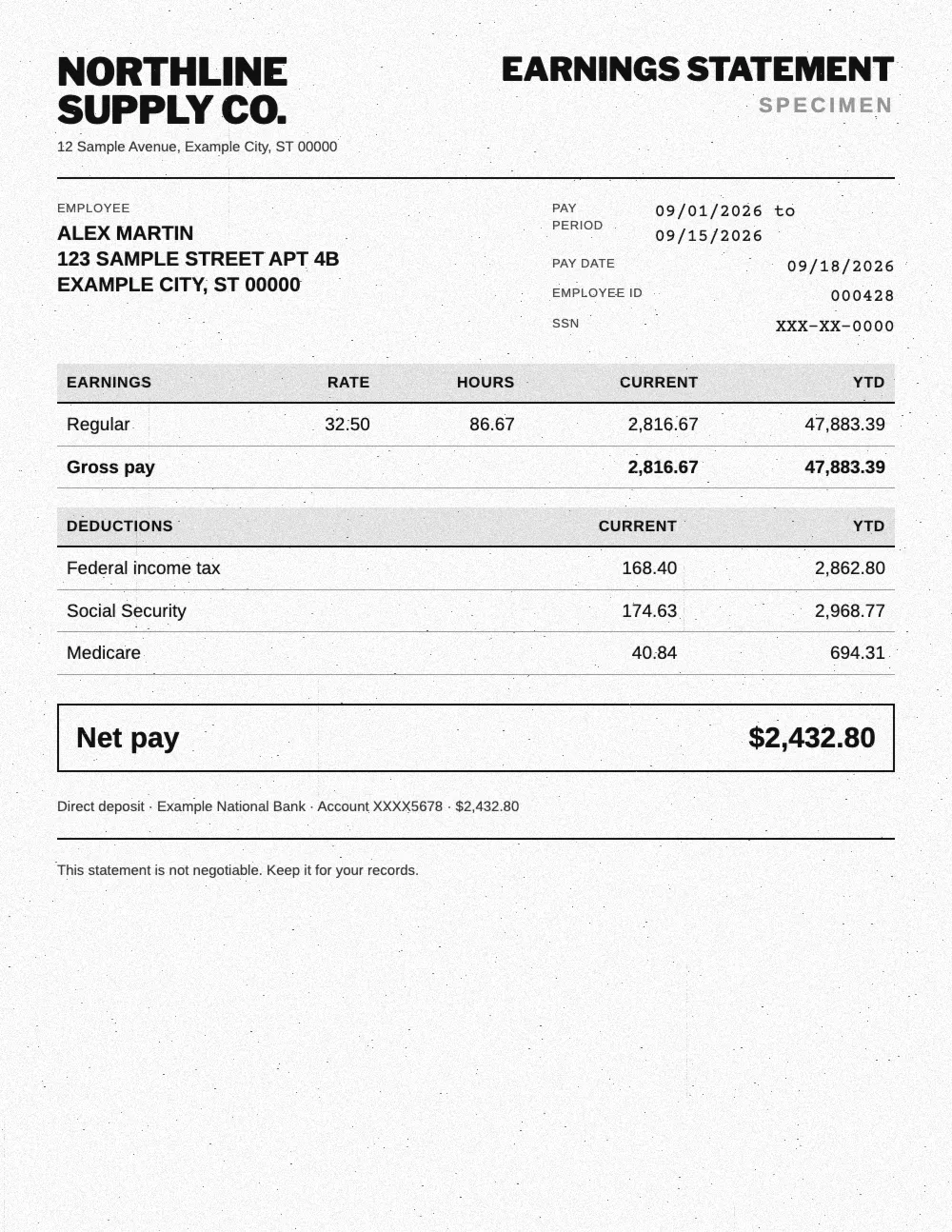
  4. Pay stubsGross minus taxes and deductions must equal net pay, and year to date totals must grow from one stub to the next.
  5. Cross document checksSame name, same employer, same address and income that holds together across every document in the file.
  6. File metadataThe software that produced each PDF and its dates. A pay stub made in a word processor is a red flag.
Fake leases

Fake lease agreements: who uses them, and how they are caught

Search for fake lease and the first page is full of templates and generators. This page is about catching their output. A fake lease turns up in four situations, and each one leaves different traces.

A fake prior lease to invent a rental history

An applicant with an eviction or no history at all submits a lease from a previous home that never existed, or a lease with a friend posing as landlord. What gives it away: a landlord who does not own the property in county records, rent never visible on the bank statements, a reference number that rings a mobile phone with no business behind it.


A lease used as proof of address or income

A lease is accepted as proof of residence in many procedures, from a driver's license to school enrollment, and a fraudster may use one to support a loan or a benefits claim. The check is the same: the address must exist, the parties must be real, and the file must not have been rebuilt from a template.

The rental scam: a lease from someone who does not own the home

Here the victim is the renter. A scammer copies a real listing, sends a lease and asks for a deposit by wire or app before any showing. The lease looks fine; the person signing it has no right to the property. Checking the owner in county records and refusing payment before a visit stops most of these.

The real lease, edited

The most common case in a screening file: a real lease where the rent was lowered, the dates moved or a name replaced. The layout is perfect, the edit sits in the file. An edited PDF often keeps its earlier versions, and the old rent or old name can be recovered.

Koncile's checker is for businesses verifying the documents they receive, never for producing one.

In short

How to spot a fake lease and other rental fraud

Leases, pay stubs, bank statements, tax forms and IDs: the rental document checker scores each document, then compares them. An inflated amount or a document built from a template leaves traces, either in the pixels or in the computer file.

  1. We compare each document with its issuer

    Bank statements come out of each bank's own system, pay stubs out of payroll software: same fonts, same way of writing the PDF. Koncile compares each document with known files from the same issuer. A Chase statement made in Word looks like no real one.

    ChaseBank of AmericaWells FargoCitiHSBCBarclaysLloydsNatWestCapital OneU.S. BankSantanderMonzoPNCAmerican ExpressRevolutStarlingTD BankAllyDiscoverNavy FederalCharles SchwabFifth ThirdHuntingtonChime
  2. We find the edits hidden in the file

    The most common fake is a real document where one figure changed: the rent on a lease, the net pay on a stub. An edited PDF often keeps its earlier versions: Koncile rebuilds them and shows the before and after, even when the layout is perfect.

  3. We spot template and AI generated documents

    Lease templates, pay stub generators, documents written by AI: their file comes from no real issuer. On a scan or a photo, K-Detect isolates edited areas and generated parts.

  4. We cross check the documents of one application

    Income on the pay stubs against the tax document, address on the ID against the proof of address, employer on the offer letter against the pay stubs: three cross checks already in place. Full file comparison is in progress.

    Income consistent across documents
    Address matches the ID
    Employer matches the offer letter
  5. We apply your screening rules

    Write your rules in plain language, a rent to income ratio, a co signer threshold, and they apply to every application with the calculation shown, the same way for every applicant.

Method

Rental application fraud: red flags document by document

A rental application is a file, not a document. A fraudulent file usually mixes real documents with one fake, most often the one that proves income. Here is what to look at on each.

Pay stubs

The most faked document in a rental file. Redo the math from gross to net, check that year to date totals grow by exactly one pay period, and that the employer exists. A real stub comes out of payroll software; a generated one comes out of a website. Our pay stub checker covers the method in detail.

Bank statements

Applicants inflate balances or add payroll deposits. Running balances must add up line by line, deposits must match the pay stubs, and rent payments to the current landlord should appear. The bank's own PDF profile is the strongest signal. See the bank statement checker.

Employment letters and tax forms

An offer letter on a letterhead anyone can copy, a W-2 that does not match twelve months of pay stubs. Call the employer at a number you found yourself, and compare annual income across documents. The tax document checker reads W-2s and 1099s.

IDs

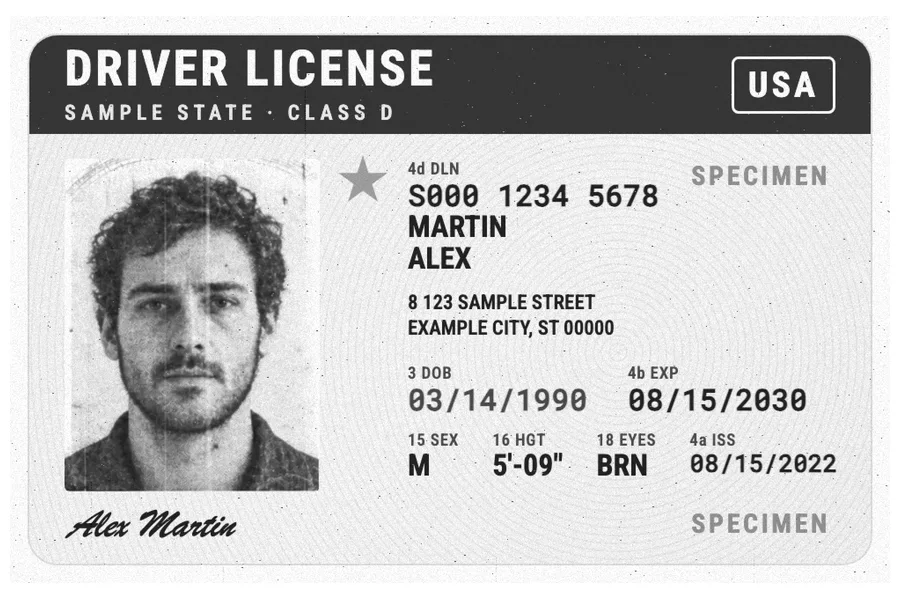
The name on every document must match the ID, and the ID itself can be edited or generated. A swapped portrait, a retyped date of birth, an AI generated license: the ID document checker covers each case.

Checks

How to check if a lease is legit, by hand

Without a tool, these three checks stop clumsy fakes in a few minutes. A tip: ask for the PDFs downloaded from the source (payroll portal, bank, property manager), not screenshots or scans.

Look up the owner in county property records

Most counties publish property ownership online through the assessor or recorder. The landlord on a prior lease should be the owner, or a management company acting for them. A private individual renting a home they do not own is a question to ask.

Match rent with the money

Monthly rent on the lease should appear as a regular payment on the bank statements, around the same date each month. Then check income: many landlords look for gross income of about three times the rent, and the pay stubs must support it.

Open the PDF metadata

Use our free PDF metadata viewer and look at Creator, Producer and the timestamps. Pay stubs and statements come out of payroll and banking systems. Word, Canva or a PDF editor are often red flags, as is a file modified after its issue date.

Compliance

Screening for fraud without discriminating

Checking documents is legitimate. Choosing whose documents to check is where landlords get into trouble.

Same checks for every applicant

The Fair Housing Act prohibits discrimination based on race, color, national origin, religion, sex, familial status or disability, and many states and cities add more protected classes. Run the same document check on every application, at the same stage, with the same threshold. A score applied to everyone is easier to defend than a hunch applied to some.

Explain the decision

When a denial relies on a tenant screening report, the Fair Credit Reporting Act requires an adverse action notice. Whatever your process, a score with a test by test justification lets you explain why an application was declined: which document, which signal, which inconsistency.

Ask for the original, not more documents

When a document scores high, ask for the original from the source (a PDF downloaded from the payroll portal or the bank) rather than piling on new requirements. Some states and cities also limit what you can ask for or how you use it: check your local rules.

Pointers

How Koncile checks a rental application

Each document gets its own fraud score from 0 to 100, then the documents are compared with each other. Here is what is in place today, and what is not yet.

Each document, with its own method

A pay stub is compared with payroll software, a bank statement with its bank's PDF profile, an ID with the template of its version. Each document goes through file analysis (producer software, dates, editing traces) and image analysis with K-Detect, our AI detection model.

Cross document checks, already in place

Three checks run today: income on the pay stubs against income on the tax document, the address on the ID against the proof of address, the employer on the employment letter against the pay stubs. A mismatch does not mean fraud, but it must be explained before approval.

Full file comparison, in progress

Comparing every document of an application with every other, field by field, is work in progress at Koncile. We say it as it is: today the checker returns one verdict per document plus the three cross checks above. A full file review is available on request, with an expert.

Rent billed against the lease

New for property managers: Koncile automatically matches the rent on each rent statement or receipt with the amount on the lease. A rent that changes without an amendment, a receipt that matches no lease: the gap is flagged without line by line review.

Your screening rules in plain language

Every property manager has thresholds. You write the rule the way you would say it, for example gross income of at least three times the rent, co signer included, and it applies to every application with the calculation shown.

File nature and image

A document arrives as a native PDF, a scan, a photo or a hybrid file. Koncile identifies the nature of the file first, because the useful checks change. On a scan or a photo, the original metadata is lost: image analysis takes over and spots edited areas and AI generated documents.

Fraud detection API

Plug rental document fraud detection into your tools with the API

Koncile's fraud detection API gives you, document by document, a score from 0 to 100 and detailed explanations of manipulation risks, right inside your own tools.

  1. 01

    Fields extracted from each document

    Names, employer, income, rent, addresses and dates, ready to cross check.

  2. 02

    Fraud checks explained

    High, medium or low level, with a one sentence explanation.

  3. 03

    Score from 0 to 100

    High risk from 80.

  4. 04

    Quick explanation

    A one line summary ready for your information system.

Request
curl -X POST https://api.koncile.ai/v1/upload_file \  -H "Authorization: Bearer $API_KEY" \  -F "files=@prior-lease.pdf"
ResponseDONEExample
{  "status": "DONE",  "General_fields": {    "Document_type": {"value": "Residential lease", "confidence_score": 0.99},    "Monthly_rent": {"value": "1,850.00", "confidence_score": 0.97}  },  "Fraud_detection": {    "risk_score": 84,    "summary": "Lease edited after signing: monthly rent changed",    "signals": [      {"name": "Traces of edits", "severity": "high"},      {"name": "Editing software", "severity": "medium"}    ]  }}
Use cases

Tenant document verification for property managers and screening platforms

Wherever an application opens a lease, a guarantee or a loan, a fake document costs months of rent. Here is where the checker fits in.

Property managers

Applications arrive by the dozen for each unit. Each document is checked on receipt, before the applicant is reviewed, and keeps the detail of its tests.

Tenant screening platforms

One API call per document returns the extracted fields, the fraud score and the justification, inside your own applicant flow.

Rent guarantee and insurance

Leases, receipts and proof of income arrive in underwriting files. The check runs before acceptance, not at the first missed payment.

Rent reconciliation

The rent billed is matched automatically with the amount on the lease, statement by statement, without manual review.

Mortgage and consumer lending

Pay stubs, tax forms and bank statements in a loan file go through the same checks, before the offer.

Independent landlords

The first document is analysed free: upload the one you doubt and get a verdict in about ten seconds.

Guide

What a rental document checker sees that the eye can't

One fake document among four real ones does not show when you flip through an application. The checker relies on signals invisible to the naked eye, in each file and between documents.

Document or checkWhat Koncile checksWhat gives a fake away
LeaseProducer software, dates, saved versions, rent and partiesAn old rent or old name recovered in the file, a lease rebuilt from a template
Pay stubPayroll software profile, gross to net math, year to date totalsA PDF from an online generator, net pay that does not follow from the math
Bank statementThe bank's PDF profile, running balances, depositsA balance that does not add up, a deposit pasted in
Tax formsW-2 and 1099 layout and values, compared with the pay stubsAnnual income that does not match twelve months of pay
IDImage, fonts, background, generator fingerprintA swapped portrait, the fingerprint of a known generator
Cross document checksIncome, address and employer across documentsAn employer or an address that changes from one document to the next
Screening rulesRent to income ratio and your own rules in plain languageIncome shown that the other documents do not support
ImageOn a scan or a photo: edited areas and AI generated parts, with K-DetectA white patch under an amount, text laid over the original image
Security

Your rental applications handled as sensitive data

A rental application brings together an identity, an address, an employer, income and bank details: everything needed to steal an identity. Founded by a former lawyer, Koncile was built with data protection at the core of its architecture: third party SOC 2 audit, GDPR compliance, secure hosting. Documents are encrypted, deleted after analysis and never used to train a third party model.

Read our security documentation
  • HIPAA Compliant badge
  • SOC 2 badge (AICPA Service Organization Control)
  • GDPR Compliant badge
  • HDS badge (French health data hosting certification)

Fake lease and rental document FAQ

Short answers, with figures when we have them.

Talk to us
  1. Check that the landlord owns the property in county records, that the rent appears on the applicant's bank statements, and that names, dates and addresses match the other documents. Call the landlord at a number you found yourself. Then check the file: an edited lease often keeps its earlier version inside the PDF.

  2. Presenting a forged or false lease to obtain a home, a loan, benefits or an ID is fraud or forgery under state law across the US. When it supports a loan application to an FDIC insured bank, 18 U.S.C. § 1014 applies: up to 30 years in prison and a $1,000,000 fine. If you receive a fake, keep the original file, the analysis report and the date of receipt.

  3. Look up the owner in county property records, check that the landlord or management company exists, and confirm the lease terms directly with them at a number you found yourself. Match the rent with the bank statements. For the file itself, upload it to the checker: editing traces and template origins show in seconds.

  4. A rent well below the market, a landlord who cannot show the home, pressure to pay a deposit by wire, gift card or payment app before a visit, a lease sent before any meeting, and an owner name that does not match county records. Any one of these deserves a pause.

  5. A language model can draft a lease in seconds, which is why a well written document proves nothing. As a detector, it can help spot inconsistent dates or amounts, but it lacks models specialised in edited or AI generated images, knowledge of the traces each editing tool leaves, and a base of each issuer's file profile. It is only one part of the machine.

  6. Usually an ID, proof of income (pay stubs, tax forms, an offer letter or bank statements), and rental history. Rules vary by state and city, and some limit what landlords may request or how they use it. Whatever you ask, ask it of every applicant and check it the same way.

  7. It depends on your volume. The price combines a base subscription and a cost per page or per document processed. The first document is free, and the plans are detailed on the pricing page.

  8. It does not see an authentic file shown by someone else: the documents are real. It does not run credit or eviction checks. Full comparison of every document in a file is in progress; today each document gets its verdict and three cross checks are in place. A high score is a signal to verify, not an accusation.

  9. Yes. Koncile complies with SOC 2 and GDPR, and an independent firm certifies our security and data protection. Your documents are hosted securely with a provider that itself holds SOC 2 and ISO 27001 certifications.

Try Koncile's fraud detection on your own documents

Upload your bank statements, pay stubs or IDs: Koncile extracts the data and flags fakes in seconds.

Talk to an expert