














Claims removed
An at fault accident disappears from the claims table while the rest of the document stays the same. On a PDF, the line is often hidden under a white box rather than deleted: the original text is still in the file.
Koncile detects tampering in PDF and image files, and documents generated or edited by AI, then returns a fraud score from 0 to 100: no claims proofs, renewal notices and certificates checked before you quote.
Create a free account to run the analysis.
Create a free accountFor document volumes or an API, talk to an expert.
The document checker used by insurers, banks and large companies
 4.8 / 5
Check that it comes from the previous insurer, on its letterhead, in the policyholder's name, with a policy number, an end date and the years of no claims discount earned. Then cross check the claims with the applicant's declaration and with CUE. Finally, check the file: the software that produced the PDF, white boxes and editing traces.
Renewal notices, no claims letters, certificates and cards: the checker runs four levels of checks. A hidden claim or an inflated discount leaves traces, either in the pixels or in the computer file.
Each insurer issues its letters from the same document system: same software, same fonts, same way of writing the PDF. Koncile compares your document with known documents from its issuer. Our library holds 62 insurers, built on French statements; UK insurers are compared with the documents already seen.
On one fake in our corpus, the text was laid over a full page image with 12 white boxes over the claims and the cancellation. Koncile spots each box and recovers the hidden content. The test catches 81 % of reported fakes, with no false alert on 186 genuine statements.
An edited PDF often keeps its earlier version. Koncile rebuilds it and shows the before and the after: a start date moved from 13 March to 13 June, a bonus coefficient moved from 0.90 to 0.68, two cases found as is in files we received.
Dates must follow each other, the licence must respect the legal age for its category, and the years of no claims must fit the cover history. On French statements, these checks run in production at ADN Solutions.
A no claims proof sets the premium. The edits we see target the same few lines every time, according to a French underwriting expert at ADN Solutions, and our own corpus of fake statements confirms it.
An at fault accident disappears from the claims table while the rest of the document stays the same. On a PDF, the line is often hidden under a white box rather than deleted: the original text is still in the file.
A policy cancelled by the insurer, for non payment or claims, closes many doors. The fraudster removes the cancellation wording or changes the status of the policy so it reads as a normal lapse.
Two years become five, or a French bonus coefficient drops from 0.90 to 0.68, a case we found as is in a file, with the old value still inside the PDF. A discount that grows faster than the cover history is a red flag.
In our corpus of 13 fake French motor statements from 9 insurers, 10 were not edited at all: they were native PDFs built from a blank page in an office tool. They never went through the insurer's document system, and the metadata says so.
Printing a fake and scanning it again wipes the metadata. It is the hardest technique to catch on the file alone: what is left is the image, the consistency of dates and discount, and the comparison with the insurer's layout.
One page straight from a PDF tool, the next one scanned. We met this mix in a real fake. Koncile identifies the nature of each page separately, because the useful checks change from one to the other.
Each document goes through six families of checks and gets a fraud score from 0 to 100, with the detail test by test. Our issuer library was built on French insurers, so a UK proof gets the full file analysis and a lighter issuer comparison.
Koncile knows the software behind each insurer's documents in its library of 62 insurers: one French insurer issues its statements with LibreOffice 7.1, another with an FOP chain. A different tool, or a file modified after its print date, raises an alert.
The test spots white rectangles laid over text and recovers what they hide. On our bench, it catches 81 % of the fakes reported, with no false alert on 186 genuine statements.
Earlier versions of the PDF are rebuilt and compared: a start date moved from 13 March to 13 June, a removed claim, an older discount figure reappear, before and after side by side.
Licence date, first policy, claims, cancellation and print date must follow each other, and a licence cannot precede the legal age for its category. A renewal date written as day and month only is an anniversary, not an inconsistency.
The years of no claims are checked against the cover history: one year per claim free year, never faster. On French statements, the bonus coefficient is recalculated at 0.95 per claim free year, with legitimate exceptions taken into account.
Native PDF, scan, photo or hybrid file, page by page. On a scan or a photo, K-Detect, our image model, spots edited areas, text laid over the original and parts generated by AI.
Without a tool, these three checks stop clumsy fakes. A tip: ask for the PDF the insurer sent, not a screenshot or a photo, so you can read its metadata.
Take the policy start date and the end date, subtract the years with an at fault claim: the years of no claims discount cannot be higher. Compare with what the applicant declared on the proposal form.
The policyholder, named drivers and vehicle must match the driving licence and the registration document. Claims must match CUE. A proof in the right name but for another car deserves a question.
With our free PDF metadata viewer, look at Creator, Producer and the dates. A letter from an insurer comes out of its document system. Word, Canva or a PDF editor, or a file modified after the print date, are red flags.
Proof of no claims is not the only insurance document that travels in a file. Certificates and cards are checked with the same method: the file first, then consistency.
Asked for by fleet managers, employers whose staff drive for work and car finance companies. Check the insurer, the policyholder, the vehicle registration, the period of cover and the software that produced the PDF. An extended period of cover is the most common edit.
In the US, drivers carry an insurance ID card as proof of cover. Check the insurer, the policy number format, the named vehicles and the effective and expiration dates, and compare a photo of the card with the policy documents.
Contractors and suppliers send one before a job, often on the ACORD 25 form in the US. The insured company, the coverage, the limits and the dates must match the contract and the company's records.
Koncile's fraud detection API gives you a score from 0 to 100 and detailed explanations of manipulation risks, right inside your own tools. One template per document type: switch fraud detection on for no claims proofs without touching the rest of the flow.
Insurer, policyholder, vehicle, dates, discount and claims, ready to cross check.
High, medium or low level, with a one sentence explanation.
High risk from 80.
A one line summary ready for your information system.
curl -X POST https://api.koncile.ai/v1/upload_file \ -H "Authorization: Bearer $API_KEY" \ -F "files=@no-claims-proof.pdf"requests.post("https://api.koncile.ai/v1/upload_file/", headers={"Authorization": f"Bearer {API_KEY}"}, files=[("files", open("no-claims-proof.pdf", "rb"))]){ "status": "DONE", "General_fields": { "Insurer": {"value": "Example Insurance Ltd", "confidence_score": 0.99}, "Years_no_claims": {"value": "5", "confidence_score": 0.98} }, "Fraud_detection": { "risk_score": 91, "summary": "12 white boxes over claims history: hidden content recovered", "signals": [ {"name": "White boxes", "severity": "high"}, {"name": "Discount history", "severity": "medium"} ] }}A no claims proof arrives with every motor quote. Checked on receipt, it stops being the document everyone skims.
Proof of no claims, driving licence, registration, ID and proof of address go through together. At Toyota Assurances in France, nine document types run through Koncile and 87% of files are processed with no human intervention.
ADN Solutions runs several million documents a year through extraction and fraud detection for insurance brokers, including date and bonus coefficient checks.
The check plugs into the policy administration system by API, one template per document type, so fraud detection switches on for no claims proofs without touching the rest of the flow.
At first notification, certificates, statements and photos are checked before payment, with a score the handler can explain.
More than 1,300 French statements studied, 256 of them to build the issuer library, and 13 confirmed fakes. The figures below are French: we do not publish a UK rate of our own yet.
The second version of our business checks, tested on 394 files, brought false alerts down from 145 to 0 on dates, from 194 to 8 on the bonus coefficient and from 223 to 6 on mandatory fields. A check that cries wolf stops being read.
A fake printed then rescanned loses the file traces: only the image and the consistency of the content remain. We say so rather than promise a detection rate that would not hold on those cases.
Directive (EU) 2021/2118 harmonised the claims history statement across the EU, with a template set by Implementing Regulation (EU) 2024/1855, applied in France since 24 July 2025. For a driver moving from the EU, an old format printed after that date deserves a question.
A claim hidden under a white box leaves no visible error on screen. The checker relies on signals invisible to the naked eye: comparison with the insurer's usual documents, and traces left by PDF editors and by AI.
| Element of the document | What Koncile checks | What gives an edit away |
|---|---|---|
| Issuing software | Creator and Producer compared with the insurer's profile | Word, Canva, a PDF editor or another version of the insurer's software |
| File dates | Creation and modification dates, compared with the print date | A file modified after it was issued, rewritten or missing dates |
| White boxes | White rectangles over text, hidden content recovered | A claim or a cancellation still present under the box |
| Saved versions | Versions appended at the end of the file, dormant objects | The old date or discount stays in the file: Koncile rebuilds the before and after |
| File nature | Native PDF, scan, photo or hybrid, page by page | One native page and one scanned page, text laid over an image |
| Dates and discount | Order of dates, licence age, years of no claims against cover history | More years of discount than years of cover, a licence before the legal age |
| Image | On a scan or a photo: edited areas and AI generated parts, with K-Detect | Text laid over the original image, a smoothed area around a figure |
A no claims proof holds a name, a licence number, a vehicle and a driver's full claims history. Founded by a former lawyer, Koncile was built with data protection at the core of its architecture: third party SOC 2 audit, GDPR compliance, secure hosting. Documents are encrypted, deleted after analysis and never used to train a model.



Check that it comes from the previous insurer, in the policyholder's name, with a policy number, dates and years of discount that fit the cover history. Cross check the claims with the proposal form and CUE. Then check the file: producer software, white boxes, editing traces. The checker at the top of this page does the file checks in about ten seconds.
Yes, and most fakes in our corpus were built from scratch rather than edited: 10 of 13. They look right on screen. The traces are in the file: software that no insurer uses, a creation date after the print date, white boxes over claims, text laid over a full page image.
Under the Consumer Insurance (Disclosure and Representations) Act 2012, a deliberate or reckless misrepresentation lets the insurer avoid the policy and refuse claims. Presenting a forged document can also be fraud by false representation under the Fraud Act 2006, punishable by up to 10 years in prison.
Yes. In the UK, most motor and home insurers report claims to CUE, the Claims and Underwriting Exchange run by MIB, and check it at quote and at claim. CUE tells you about claims; it does not tell you whether the document in front of you was edited. That is what the checker looks at.
You measure a risk. It becomes high when one test goes over its threshold or several point the same way: a period of cover edited in the file, metadata that does not match the insurer, an earlier version hidden in the PDF. Then confirm with the insurer.
It can flag inconsistent dates. It lacks the rest: knowledge of each insurer's document software, the reading of white boxes and hidden versions of the PDF, and models trained on edited or generated images. A language model is only one part of the machine.
It depends on your volume. The price combines a base subscription and a cost per page or per document processed. The plans are detailed on the pricing page.
Yes. Koncile complies with SOC 2 and GDPR, and an independent firm certifies our security and data protection. Documents are encrypted, deleted after analysis and never used to train a model.
Each document gets its own method: a proprietary ML model for photos, known metadata and forensics for native PDFs, and contextual cross checks.
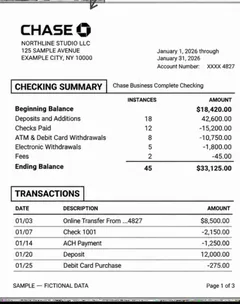
Inflated balances, deleted lines, a PDF rewritten with software other than the bank's.
See the detection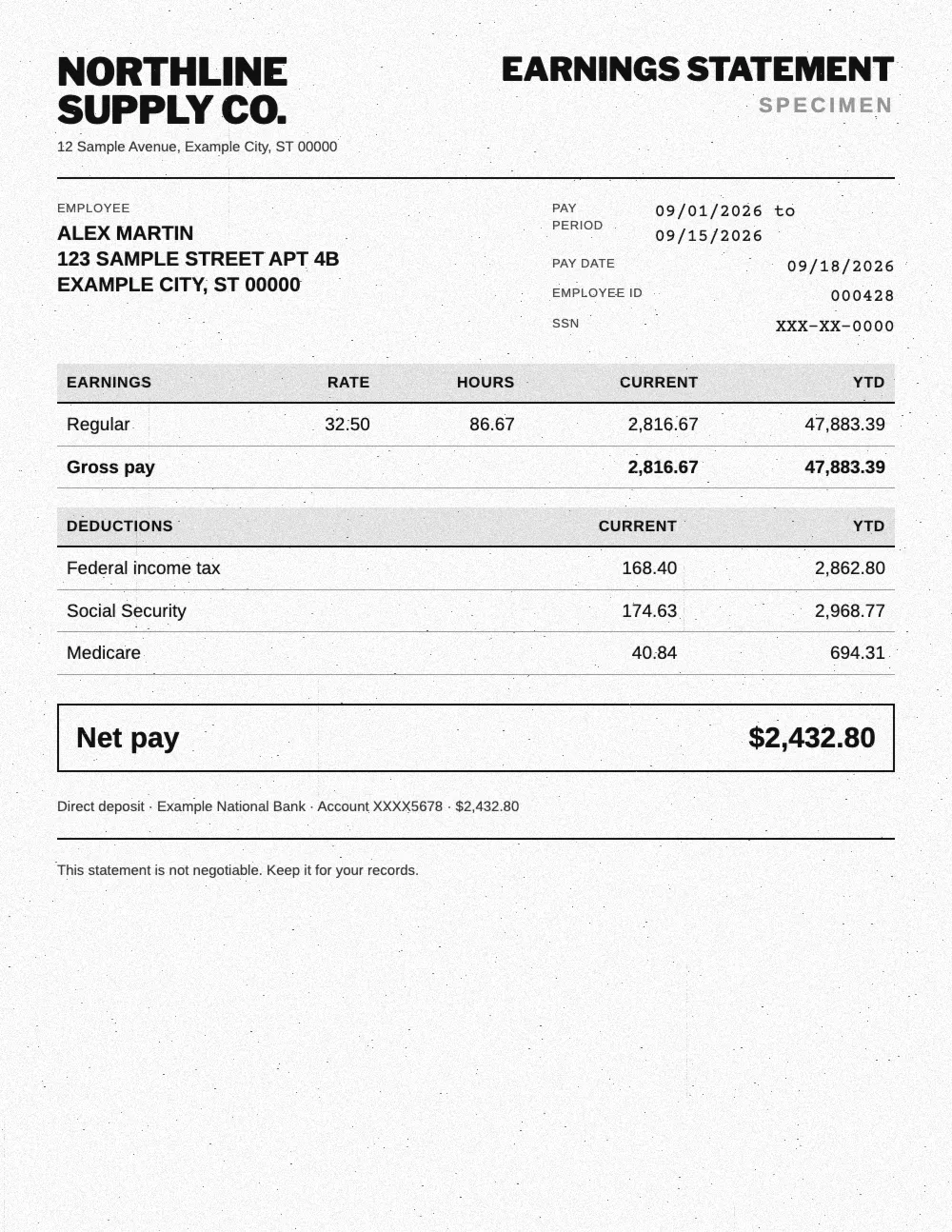
Net pay changed, contributions that do not match gross pay, a layout that does not match the payroll software.
See the detection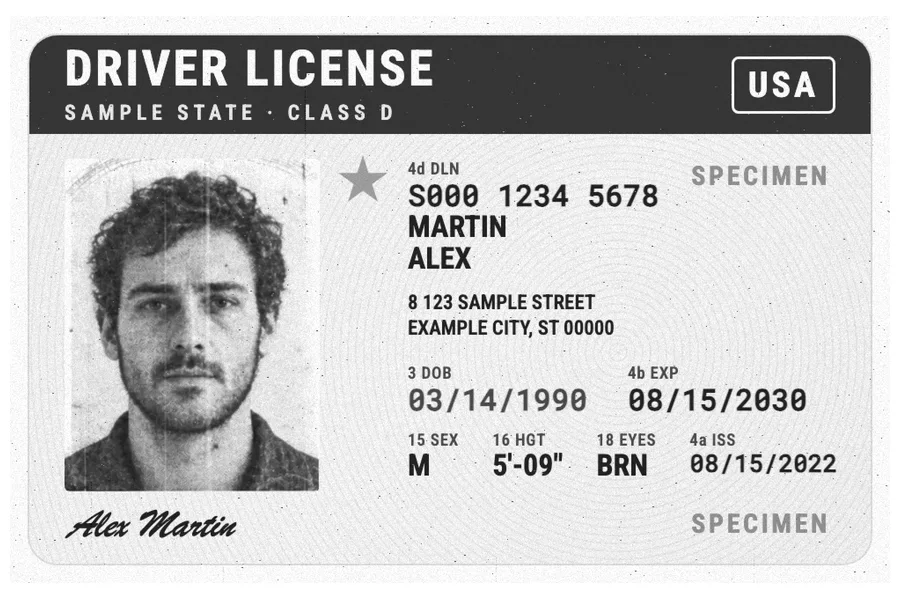
Photo replaced, date of birth or number changed, an MRZ that no longer matches the fields.
See the detection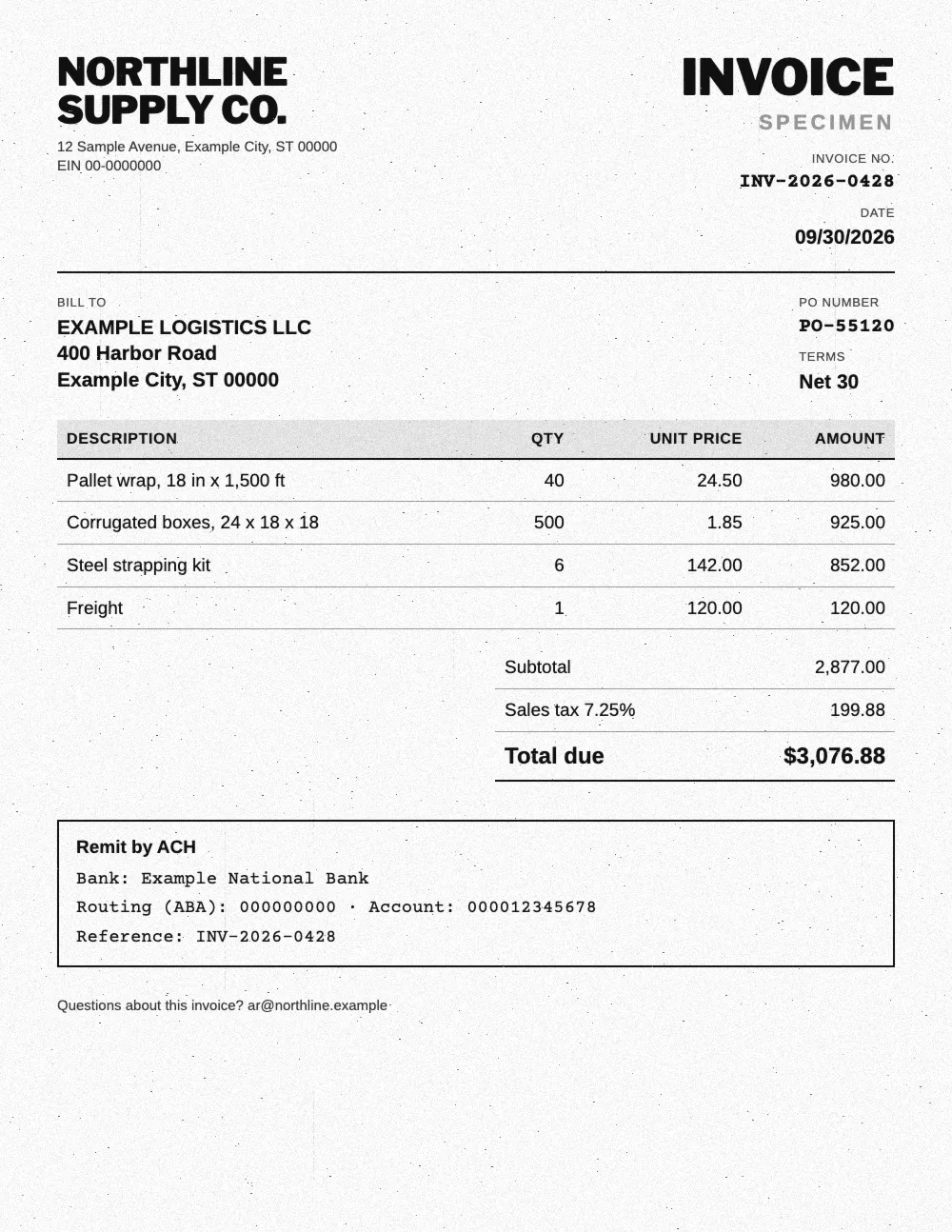
Edited amounts, wrong VAT, duplicates and made up suppliers.
See the detectionUpload your bank statements, pay stubs or IDs: Koncile extracts the data and flags fakes in seconds.
Talk to an expert