














DVLA check code
Generated by the driver on GOV.UK, valid for 21 days, used with the last 8 characters of the licence number.
Koncile detects tampering in photos, scans and PDFs of driving licences, and licences generated or edited by AI, then returns a fraud score from 0 to 100: stop fake licences before they reach your fleet or your policies.
Create a free account to run the analysis.
Create a free accountFor document volumes or an API, talk to an expert.
The document checker used by insurers, banks and large companies
 4.8 / 5
In Great Britain, ask the driver for a DVLA check code and look up their record on GOV.UK: it shows the categories, penalty points and any disqualification. The code says nothing about the photo or PDF you were sent. For that, check the photocard template, fonts, background, licence number, categories and dates, and the file itself.
Generated by the driver on GOV.UK, valid for 21 days, used with the last 8 characters of the licence number.
Built from the surname and the date of birth. If it does not match the printed name and birth date, stop there.
A car licence (B) from 17, a moped (AM) from 16. A category issued before the minimum age is a strong signal.
The photocard is renewed every 10 years. Issue date, expiry and date of birth must fit together.
Each field has its font and baseline. A retyped date drifts by a few pixels or changes weight.
The fine background pattern must run unbroken under the text and the photo. A smooth patch means something was erased.
Edges too sharp, light from another side, missing grain: the classic signs of a swapped portrait.
Device, software, creation and modification dates: a licence reopened in an editing tool deserves a closer look.
Great Britain has the most open official licence check in Europe. It answers one question, whether this driver is entitled to drive, and leaves another open: is the licence in front of you authentic?
The driver signs in to View or share your driving licence information on GOV.UK and creates a check code, valid for 21 days. With that code and the last 8 characters of the licence number, an employer or a hire company sees the categories the driver holds, penalty points and any disqualification. It is the reference check, and it should stay in your process.
Fleet operators often go through a licence checking service, with each driver's signed consent, to repeat the check over time. Hire desks ask for the code at booking. Both rely on the driver to share a code, and on staff to look at the photocard: that second step is where an edited licence slips through.
An insurer receives a photo in an online quote. A delivery platform onboards drivers from an app. A hire company deals with a licence from Northern Ireland, issued by the DVA rather than the DVLA, or from abroad. In each case, what you actually hold is a picture or a PDF, and a fraudster edits the picture: a category added, a date moved, a portrait swapped.
A licence almost always arrives as a photo or a scan, and generators now produce them in seconds. The fake driving licence checker reads the image first, then the template of the version, the licence number, the categories and the dates. When the licence arrives as a PDF, the file is read too.
K-Detect, our image analysis model trained on fakes, examines the pixels of the card. It flags a portrait pasted in or regenerated, and licences fully generated by AI from a sample image or a photo of a real card. The score shows where to look.
Each photocard version has its fonts, weights, baselines and background. An added category or a retyped date drifts by a few pixels, breaks the background pattern or changes font.
The licence number must carry the surname and the date of birth printed on the card. Each category must have been issued after its minimum age, and the photocard dates must fit together.
Producer software, creation and modification dates, saved versions, the way the PDF was written: a licence rebuilt in an editor or produced by a known generator leaves its signature in the file, even when the image looks perfect.
Name, date of birth and years of driving are compared with the ID, the vehicle registration and the claims history. A real licence shown by the wrong person does not show on the card: it shows in the file, and in the DVLA check code.
Search results for this topic are full of sites offering to make a licence, some of them with AI. This page is about catching their output, not producing it. The good news for a checker: generators are lazy in predictable ways.
They produce an image that looks like a photocard: right colours, a portrait, plausible fields, sometimes laid on a desk to imitate a phone photo. Many of these sites are scams in their own right. What they cannot hide is that one engine produces thousands of documents, with the same technical fingerprint in every file.
A UK licence number is not random: it encodes the surname and the date of birth. Generators often pick it at random, or keep the sample number. They draw categories and dates at random too, which gives a car licence issued at 16 or a photocard that expires before it was issued. Fonts are close, rarely exact, and the background pattern repeats where it should flow.
The most common case in a real file: an authentic photo where one field changed. A category added to drive a van, an issue date moved back to look more experienced, a portrait swapped. The field is erased and retyped. What breaks: the background under the field, the font weight, and the image EXIF, which often keeps the name of the editing software.
The hardest case: an authentic, untouched licence shown by someone else, or a licence revoked since it was issued. No file check sees it, since nothing was modified. The DVLA check code, the match with the ID document and the rest of the file do that work.
Koncile's checker is for businesses verifying the licences they receive, never for producing one.
Without a tool, these three checks stop clumsy fakes in a few minutes. A tip: ask for the original photos of the front and back, not a screenshot or a PDF put together from them.
On a GB licence, the first five characters come from the surname, padded with 9s for short names. The next six encode the date of birth, with 5 added to the first digit of the month for women. Compare them with the printed surname and birth date.
Read the issue date of each category on the back and recompute the holder's age at that date: no car before 17 outside rare exemptions, no moped before 16. The photocard must have been issued in the last 10 years, unless it has expired.
Follow the background pattern under the photo and the dates: it must run without a break. Be wary of a portrait with sharp edges, light from another side, or a card photographed perfectly flat with no glare at all.
Each check reads in two steps: what you can look at yourself, then what the software measures on the file. Together they give a fraud score from 0 to 100, justified test by test. They are the same checks as for an ID card.
By eye, compare two identical digits in two fields and lay a ruler on the baselines. The software does the same at pixel level, on every field, against the template of the licence version. It also follows the background pattern under each field. A shift on one category date alone does not come from the scanner, which would shift the whole line.
By eye, look at the portrait: edges, light, grain. The software reads the image EXIF (device, software, dates) and K-Detect, our image analysis model, looks for edited areas and AI generated portraits. A phone followed by an editing tool is a signal to examine. No EXIF? That proves nothing, many apps strip it.
When the licence arrives as a PDF, the software reads how the file was written: object order, numbering, compression. That fingerprint names the engine that produced the file, even when the metadata was wiped. Once a generator's fingerprint is known, all its documents fall at once, whatever name is printed on them.
Every category has a minimum age, and the issue date must respect it. These consistency rules already run in production for our insurance clients, on their claims history documents: licence obtained before the legal age, policy taken out before the licence was issued. Obvious? They still catch fakes generated in series, with dates drawn at random.
In a motor insurance file, the licence comes with the vehicle registration, the claims history and the ID. Name, date of birth and years of driving must hold together from one document to the next. A driver showing fifteen years of licence and two years of insurance history is a question to ask before the policy is bound.
No access to DVLA records: the checker judges the document sent, and the check code confirms the entitlement. Use both.
Koncile's fraud detection API gives you a score from 0 to 100 and detailed explanations of manipulation risks, right inside your own tools.
Front and back, licence number, categories and dates, field by field.
High, medium or low level, with a one sentence explanation.
High risk from 80.
A one line summary ready for your information system.
curl -X POST https://api.koncile.ai/v1/upload_file \ -H "Authorization: Bearer $API_KEY" \ -F "files=@licence-front.jpg"requests.post("https://api.koncile.ai/v1/upload_file/", headers={"Authorization": f"Bearer {API_KEY}"}, files=[("files", open("licence-front.jpg", "rb"))]){ "status": "DONE", "General_fields": { "Document_type": { "value": "UK photocard driving licence", "confidence_score": 0.99 }, "Categories": {"value": "AM, B", "confidence_score": 0.97} }, "Fraud_detection": { "risk_score": 89, "summary": "Licence number does not match the birth date, category B issued before 17", "signals": [ {"name": "Category and age consistency", "severity": "high"}, {"name": "Image retouching", "severity": "medium"} ] }}Wherever a licence opens a policy, a rental or a driving job, a fake is costly. Here is where the checker fits in.
The licence arrives in the underwriting file with the claims history, the vehicle registration and the ID. Anomalies are flagged before the policy is bound, not at the first claim.
The driver uploads a photo of their licence at booking. The check runs in seconds, before the keys are handed over, next to the DVLA check code.
Every driver of a company vehicle needs the right category. The licence file is checked when the vehicle is assigned, and the detail of each test is kept for audit.
Delivery, ride hailing and logistics platforms onboard drivers from an app. The checker flags the licences that deserve a closer look before the first job.
In a car finance application, the licence backs up the ID. Name and date of birth are cross checked with the rest of the file.
A photocard licence is often used as ID. It goes through the same image and file checks as an ID card.
A category added to a real licence often leaves no visible error. The fake driving licence checker relies on signals invisible to the naked eye, in the pixels of the image and, when the licence arrives as a PDF, in the file itself.
| Element of the licence | What Koncile checks | What gives a fake away |
|---|---|---|
| Portrait | Pixels of the face and its outline, grain, lighting, match with the card background | A portrait pasted in, regenerated by AI or with a different grain from the rest of the card |
| Security background | Continuity of the pattern under the fields and the photo | A pattern broken, smoothed or repeated by a clone stamp |
| Fonts and geometry | Font, weight, baselines and margins of each field, compared with the template of the version | A date or category retyped that drifts by a few pixels |
| Licence number | Surname and date of birth encoded in the number, compared with the printed fields | A number that belongs to someone else, or the sample number of a template |
| Categories | Issue date of each category, compared with the minimum age | A car category issued at 16, a motorcycle category issued too early |
| Photocard dates | Issue date, expiry and date of birth | A card that expires before it was issued, a validity longer than 10 years |
| Image metadata | EXIF and marks left by AI tools: device, software, dates | Editing software after the phone, the mark of a generative AI |
| PDF file | Producer software, dates, saved versions, serialisation fingerprint | A PDF resaved in an editor, the fingerprint of a known generator |
A driving licence brings together a name, a date and place of birth, a number and a photo: everything needed to steal an identity. Founded by a former lawyer, Koncile was built with data protection at the core of its architecture: third party SOC 2 audit, GDPR compliance, secure hosting. Licences are encrypted, deleted after analysis and never used to train a third party model.




It is a tool that combines several technologies to spot the anomalies of a fake: machine learning that analyses the image of the licence, business rules on categories, dates and the licence number and, when the licence arrives as a PDF, analysis of the file, which is written like code. The goal is to stop fakes before they reach your policies, rentals or driver pool.
The holder can view their own record on GOV.UK with their driving licence number, National Insurance number and postcode, and create a check code to share it. With that code and the last 8 characters of the licence number, an employer or a hire company sees the categories, penalty points and any disqualification.
When a licence is applied for, the DVLA confirms the applicant's identity, with a passport or with a countersignatory who knows the applicant. Once the licence is in circulation, nobody checks the photo you are sent for you: the check code confirms the entitlement, and the file check tells you whether the licence itself was edited.
Often, yes. A photo still shows the fonts, the alignment, the background pattern and the portrait, and the licence number can be decoded against the printed name and birth date. What a photo hides, the physical security features, is replaced by image analysis and file metadata. You never know for certain: you measure a risk.
Yes, in most cases. AI generators produce convincing images but get the logic wrong: a licence number that does not match the name or birth date, categories issued before the legal age, a background that repeats. Image analysis spots generated areas, and in a PDF the generator's fingerprint gives it away.
Yes. A driving licence is an identity document under the Identity Documents Act 2010, and possessing or using a false one is a criminal offence, on top of driving without a valid licence. If you receive a fake, keep the original file, the analysis report and the date of receipt.
It can help, mainly to spot an inconsistent date or category. It lacks three things: models specialised in images edited or generated by AI, knowledge of the traces each editing tool leaves, and the templates of each licence version, which bring the shifts out. A language model is only one part of the machine.
It depends on your volume. The price combines a base subscription and a cost per page or per document processed. The plans are detailed on the pricing page.
No. The check code confirms what the driver is entitled to drive, from DVLA records. Koncile checks the licence file you were sent: editing, AI generation, licence number, categories and dates. A real licence shown by the wrong person passes the file check, an edited licence of a real driver passes the code check. Use both.
Yes. Koncile complies with SOC 2 and GDPR, and an independent firm certifies our security and data protection. Your documents are hosted securely with a provider that itself holds SOC 2 and ISO 27001 certifications.
Each document gets its own method: a proprietary ML model for photos, known metadata and forensics for native PDFs, and contextual cross checks.
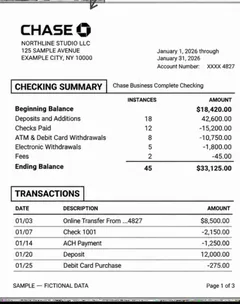
Inflated balances, deleted lines, a PDF rewritten with software other than the bank's.
See the detection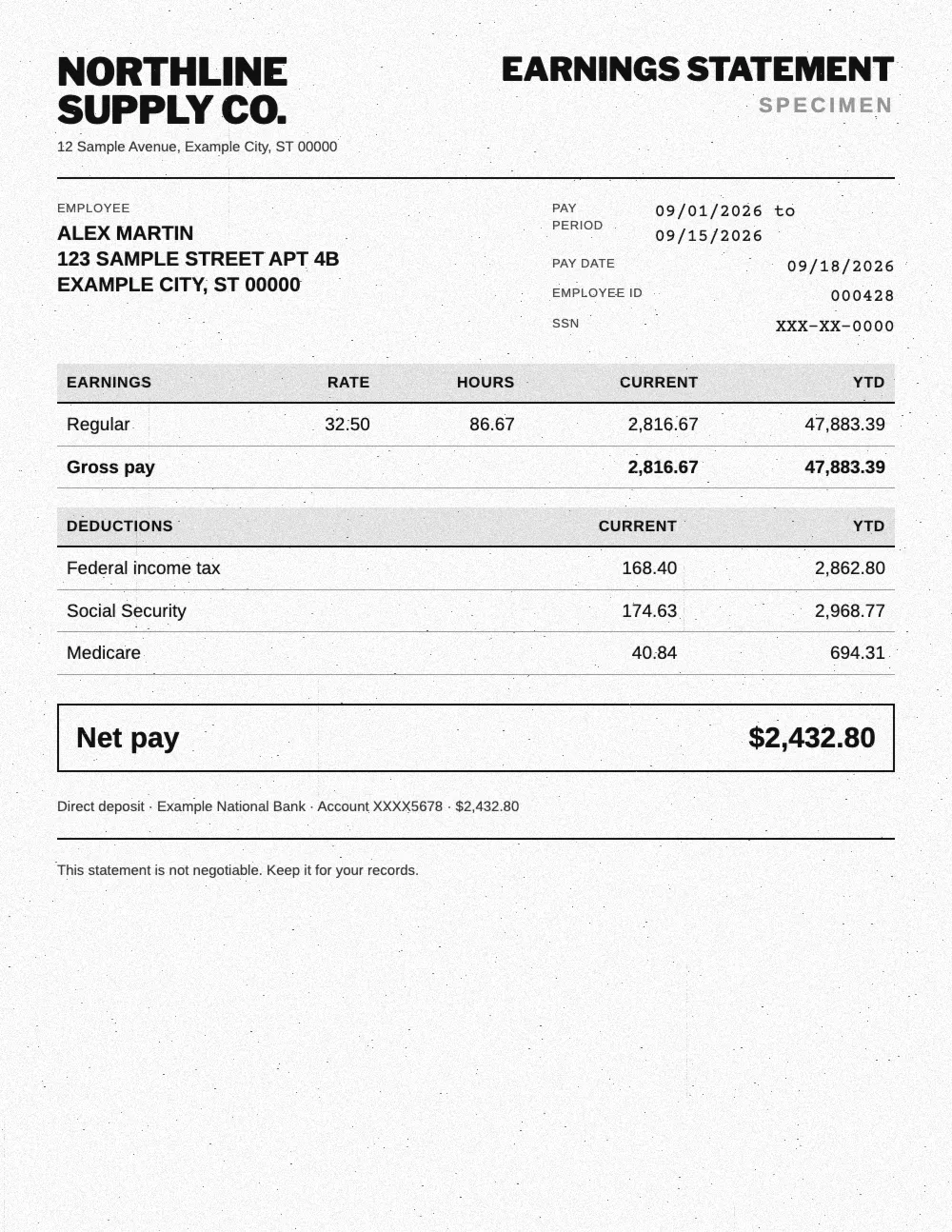
Net pay changed, contributions that do not match gross pay, a layout that does not match the payroll software.
See the detection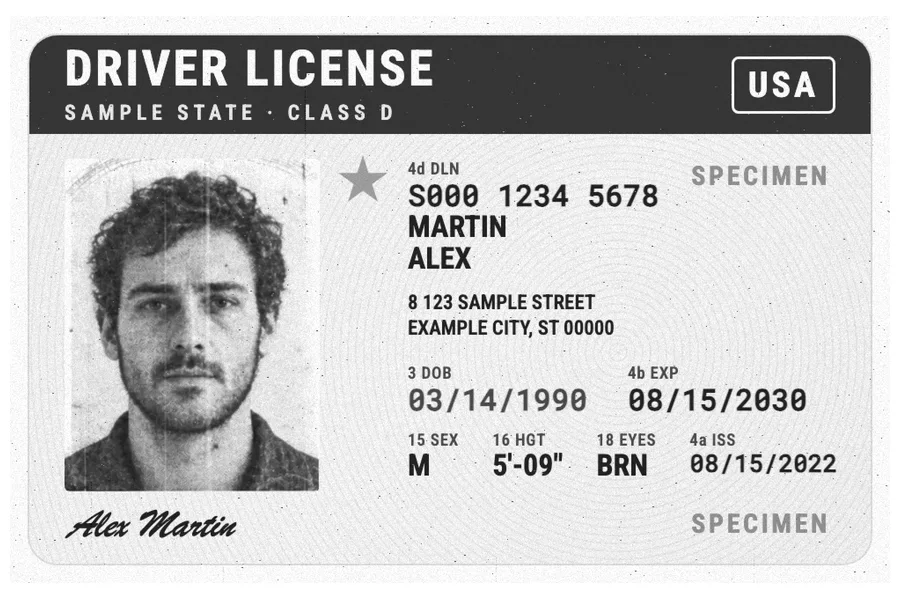
Photo replaced, date of birth or number changed, an MRZ that no longer matches the fields.
See the detection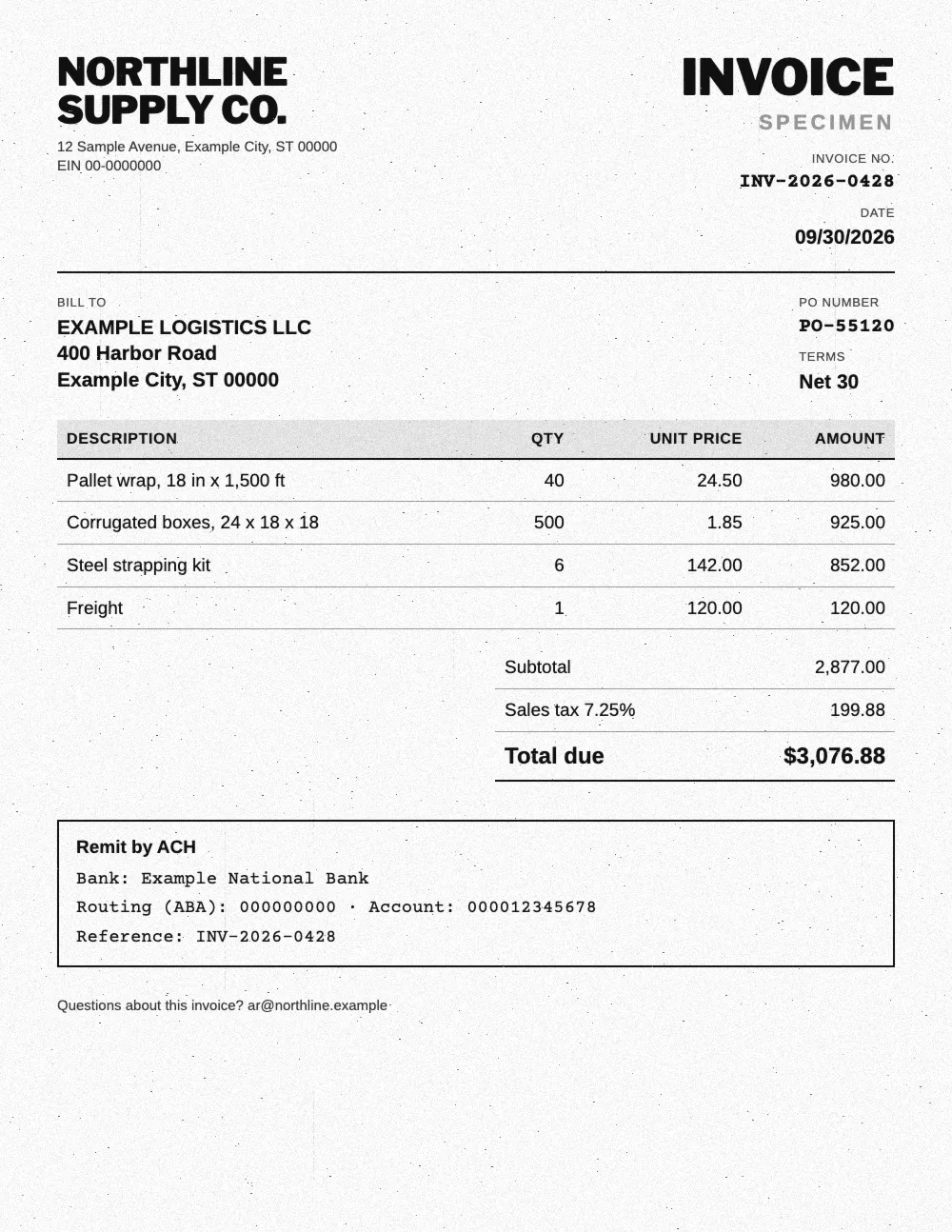
Edited amounts, wrong VAT, duplicates and made up suppliers.
See the detectionUpload your bank statements, pay stubs or IDs: Koncile extracts the data and flags fakes in seconds.
Talk to an expert