What is EDI?
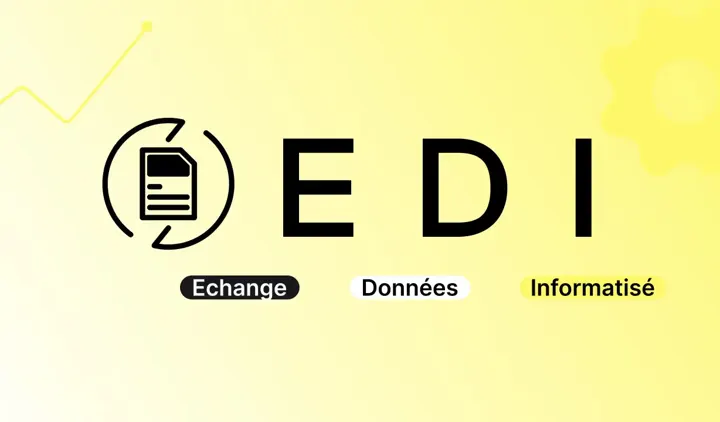
The EDI (Electronic Data Interchange) refers to the automated transfer of commercial information from one computer system to another, using standardized and secure formats.
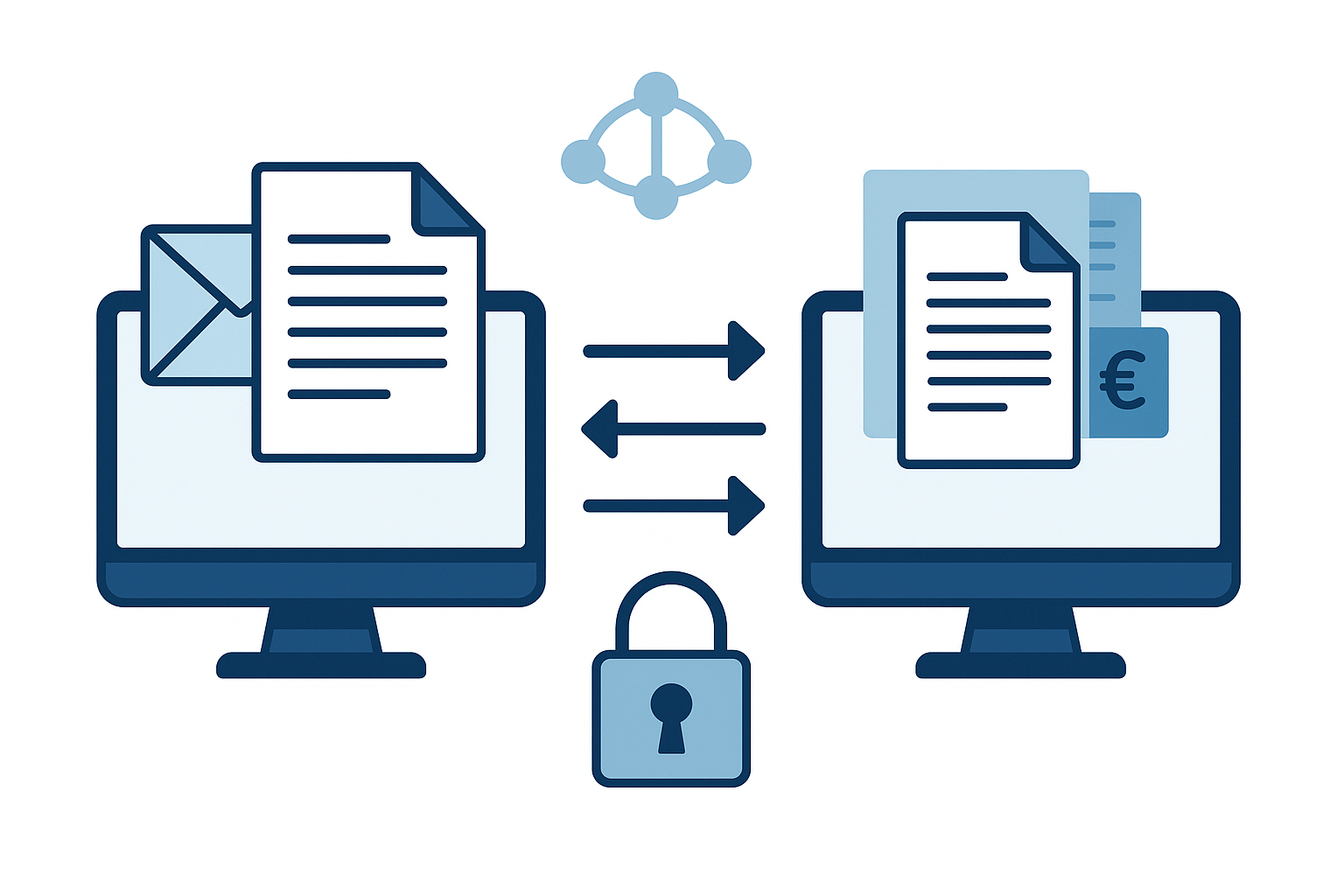
Concretely, it replaces the traditional exchanges of business documents (paper, fax, e-mail) with direct and standardized communication between the systems of business partners.
Data such as purchase orders, shipping notes, or invoices are automatically extracted from the sender's system, transmitted via a secure network, and then integrated into the recipient's system without manual intervention.
This operation is based on adapted software solutions (ERP and tools for managing stocks or orders) and on common standards, such as EDIFACT in the automotive sector. EDI thus makes it possible to speed up the processing of documents, to reduce errors, and to ensure total interoperability between heterogeneous systems.
Who is EDI for?
The EDI mainly concerns companies wishing to streamline and automate their data exchanges with their business partners. It is particularly suitable for relationships B2B (inter-company) and is relevant when the volumes of documents exchanged are significant.
This technology is aimed at suppliers, customers, logistics providers as well as financial organizations by offering them faster and secure information processing. Internally, it benefits several services: commercial (order tracking), production (planning), logistics (flow management), and finances (billing and payments). In particular, the teams in charge of sales administration (ADV) benefit considerably from this mechanism for the processing and validation of orders.
The benefits of EDI
How does EDI work?
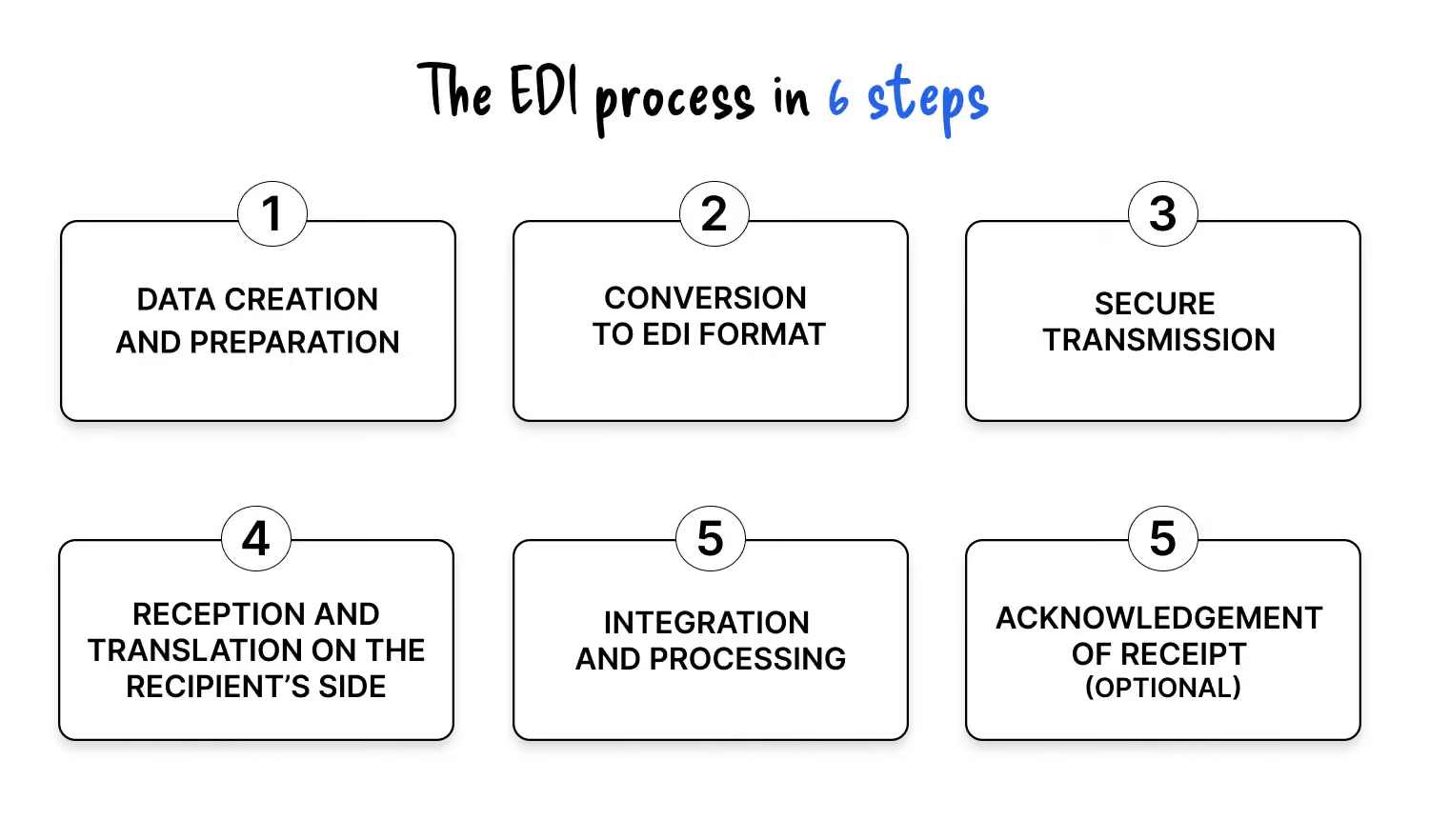
The EDI is based on the conversion of commercial documents into standardized electronic formats, allowing their automatic transmission and integration between information systems.
This process generally involves the following steps:
1. Data creation and preparation
The necessary information (e.g. order form, invoice, shipping notice) is generated by the shipper's internal system, often an ERP, and structured to be ready for conversion.
2. Conversion to EDI format
This data is translated into a standardized format agreed upon with the business partner (e.g. EDIFACT, XML, OIC), using EDI software or a specialized service provider. This step ensures that both systems can interpret the data identically.
3. Secure transmission
Once converted, the document is sent via a secure protocol or network:
- Direct connections (Point-to-point) with AS2, OFTP2, FTPS, HTTPS
- Private networks or VAN (Value Added Network).
The EDI system automatically identifies the recipient and transmits the file to them using the agreed method.
4. Reception and translation on the recipient side
The partner receives the EDI file, validates its integrity, and then converts it into a format that can be used by its own internal applications (ERP, inventory management software, invoicing, etc.).
5. Integration and treatment
Data is directly integrated into business systems, without manual entry, which speeds up processing and reduces errors.
6. Acknowledgement of receipt (optional)
In some cases, an EDI confirmation message is sent to the sender to indicate that the document has been successfully received and processed.
The different EDI models
EDI can be implemented using several approaches, each with its own advantages and constraints:
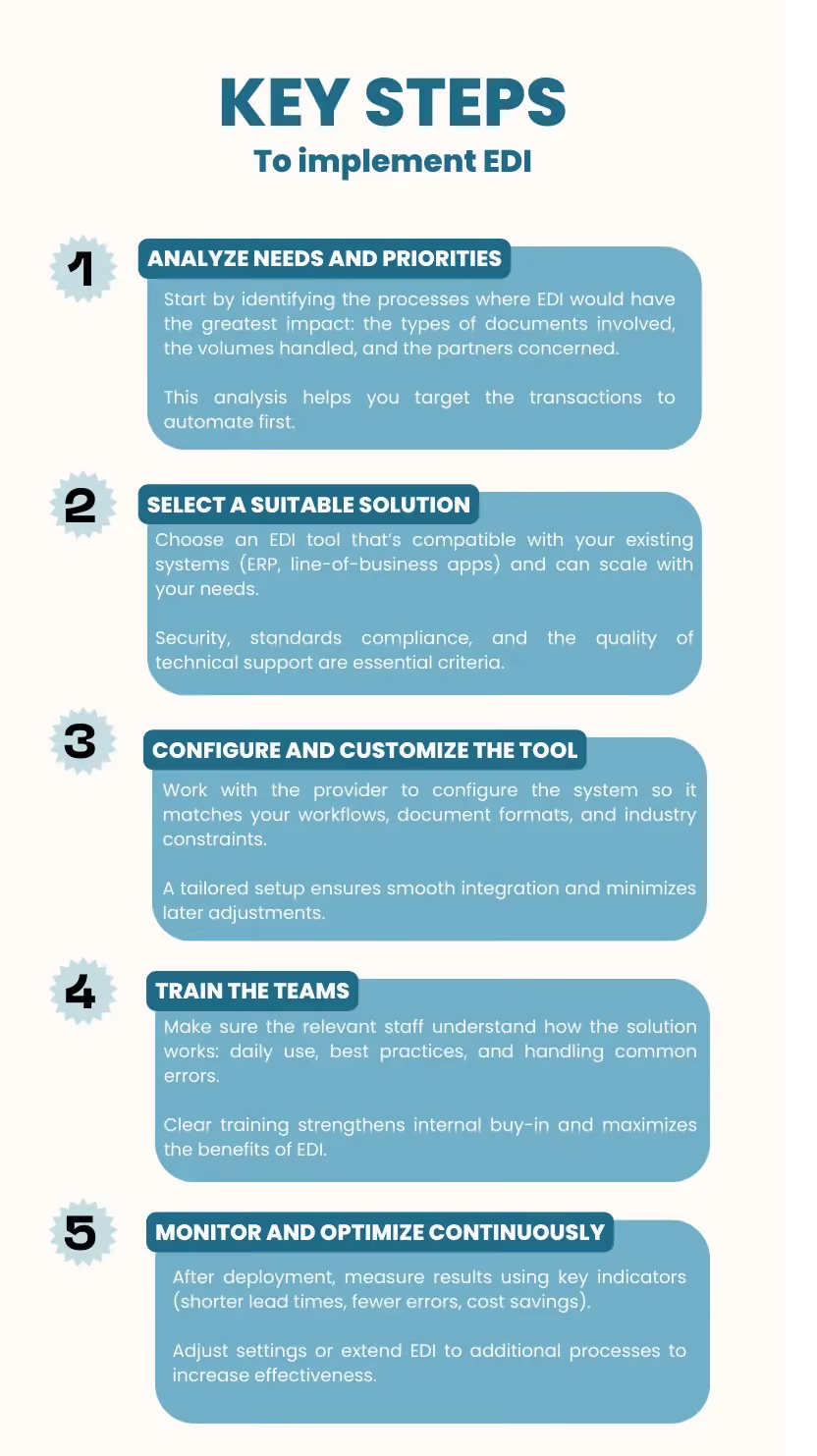
Setting up EDI: key steps
The success of an EDI project depends on rigorous preparation and gradual deployment. Here are the main steps to follow: